
The Faces of Leadership, presented by the Command Presence Leadership Institute, believes that leadership is about two things – people and action. Leaders from across society are interviewed to discover what drives them, what makes them effective, and what the impact is of the leadership they provide.
Listen On:


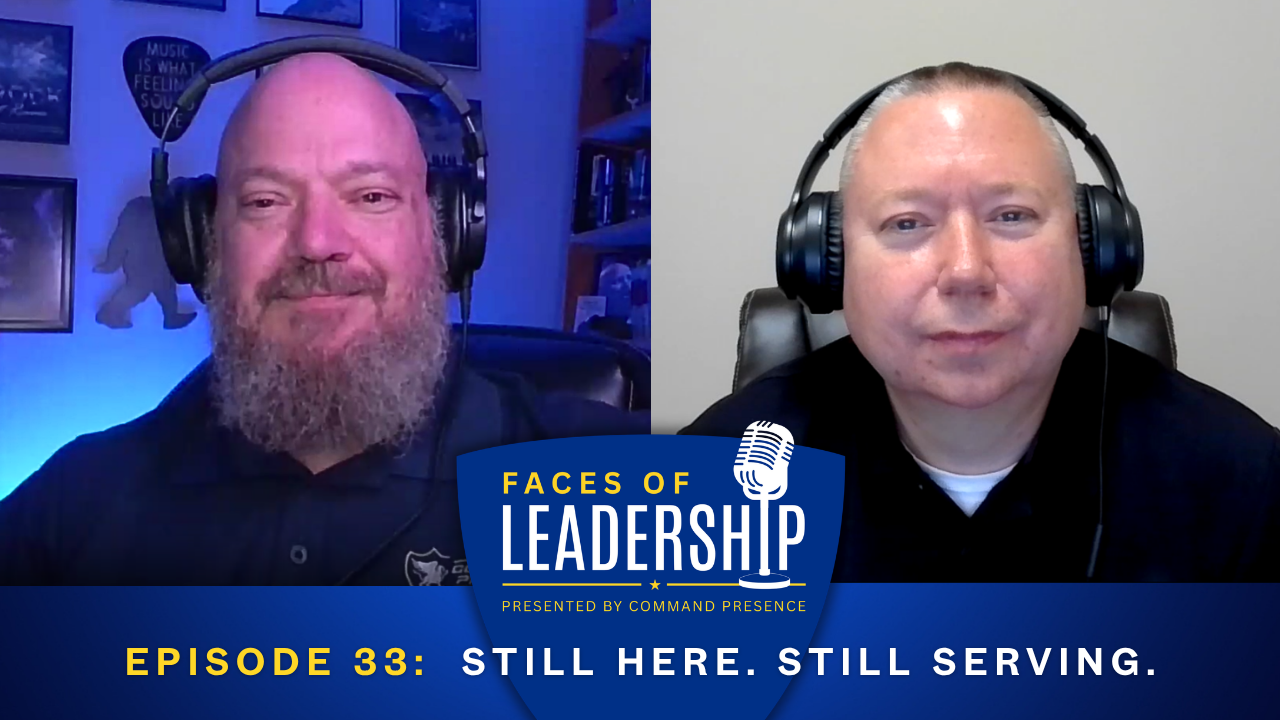
Episode 33: Still Here. Still Serving.
In Episode 33 of the Faces of Leadership Podcast, host Michael Warren sits down with retired Norton, Virginia, Police Chief James Lane for a powerful conversation about the realities of law enforcement, the importance of training, and the resilience required to overcome life-changing adversity.
After 30 years in law enforcement, including serving as chief of police since 2014, Lane's career changed dramatically on May 7, 2021.
While assisting an officer on a shoplifting call, Lane was ambushed and shot five times. What followed was a fight for survival in which years of training, split-second decisions, and determination played critical roles.
Chief Lane shares his firsthand account of the shooting, the years of rehabilitation that followed, and why he ultimately chose to return to serving the community he loved.
In This Episode:
• Leadership at Every Rank: Lessons from 30 years of policing, from patrol officer to chief.
• Community Relationships: Why trust and meaningful connections must be built before they're needed.
• The Fight for Survival: A firsthand account of the shooting and the decisions that helped Lane survive.
• Training That Matters: How lessons learned decades earlier became critical during a life-threatening encounter.
• Recovery and Resilience: The physical and emotional challenges of recovery and the determination to return to service.
• A Continuing Mission: Chief Lane's work with the Southwest Virginia Criminal Justice Academy and his vision for Bibles for First Responders.
This episode is a reminder that training can save lives, relationships can sustain us through adversity, and leadership is ultimately measured by our willingness to serve others.
Watch Episode 33 and hear Chief Lane's remarkable story.
Subscribe to the Faces of Leadership Podcast for candid conversations with public safety professionals about the experiences and lessons that shape effective leadership.
Faces of Leadership
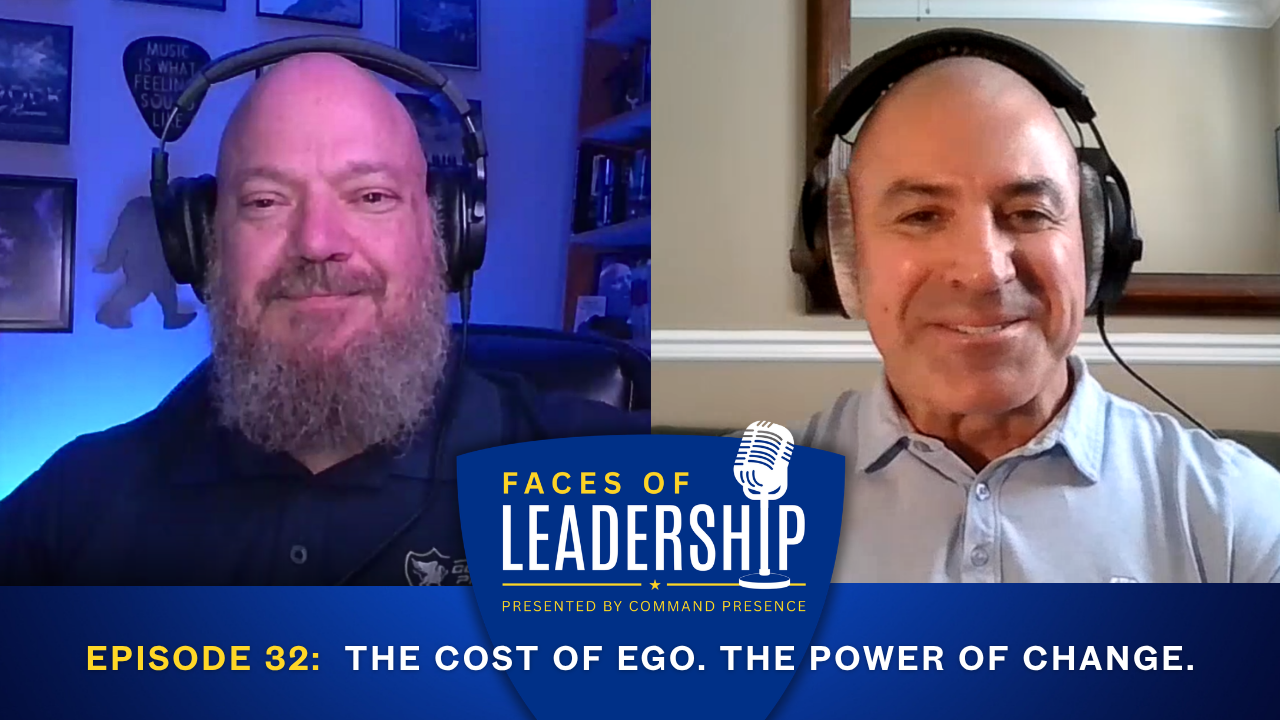
The Cost of Ego. The Power of Change.
Guest: Rob Patton | Retired Sacramento County Sheriff's Lieutenant, Founder of Cro-Magnon Leadership, Host of The Good CARMA Podcast,and Author of Mediocrity Is for Suckers
What does it take to recognize your mistakes, take ownership of your decisions, and become a better leader?
In Episode 32 of the Faces of Leadership Podcast, presented by Command Presence Training, host Michael Warren welcomes Rob Patton, a retired Sacramento County Sheriff's lieutenant with more than 21 years of law enforcement experience, for a candid conversation about adversity,accountability, personal growth, and the people who shape our lives.
Rob's career spans corrections, patrol, investigations, SWAT, the FBI gang task force, internal affairs, and supervision. Today, he works with law enforcement agencies throughout California as a senior law enforcement consultant with the California Affiliated Risk Management Authorities (CARMA). He is also the founder of Cro-Magnon Leadership and author of the upcoming memoir, Mediocrity Is for Suckers.
Drawing from Rob's personal experiences and the stories shared in his book, Michael and Rob explore how early influences, difficult decisions, professional setbacks, and meaningful mentorship can shape the trajectory of a person's life and career. From a high school football coach whose recognition changed Rob's outlook to a professional wake-up call that forced him to confront his own behavior, this conversation examines the difference between simply holding people accountable and helping them become better.
In this episode, Michael and Rob discuss:
• The Power of Recognition: Why acknowledging someone's effort and potential can have a lasting impact on their confidence, motivation, and future.
• Accountability and Personal Responsibility: How taking ownership of mistakes creates opportunities for meaningful change and stronger leadership.
• The Influence of Mentorship: Why great leaders recognize potential in others, offer guidance, and have difficult conversations when necessary.
• Ego, Adversity, and Reinvention: How professional setbacks can become defining moments when individuals choose growth over bitterness.
• Leadership Beyond Rank: Why developing leadership skills begins long before receiving a formal title or promotion.
• The Importance of Difficult Conversations: How speaking up, addressing concerns, and genuinely caring about others can influence both performance and officer safety.
• Breaking the Cycle of Self-Sabotage: How recognizing personal patterns and blind spots can help individuals make better decisions.
• Leadership as Risk Mitigation: Why effective leadership, sound training, and organizational accountability are essential to protecting personnel, agencies, and communities.
One of the most thought-provoking questions Michael raises is whether employees succeed because of the leadership they receive, in spite of that leadership, or sometimes even to spite it. Rob emphasizes that leadership is a skill that must be developed and practiced. He also shares why his upcoming book is not about pointing fingers at others, but about examining his own decisions, acknowledging his shortcomings, and encouraging readers to recognize their potential for change.
Our past experiences may shape us, but the decisions we make moving forward determine who we become.
Whether you're a law enforcement professional, supervisor,executive, trainer, or someone committed to personal development, this episode offers valuable perspectives on accountability, resilience, mentorship, and the responsibility leaders have to invest in others.
About Our Guest: Rob Patton
Rob Patton is a retired Sacramento County Sheriff's lieutenant with more than two decades of experience across numerous law enforcement assignments, including patrol, investigations, SWAT, specialized enforcement,and leadership. Following his law enforcement career, Rob served with California POST and now works with law enforcement agencies throughout California to strengthen organizational practices and reduce operational risk. He is the founder of Cro-Magnon Leadership and author of Mediocrity Is for Suckers, an upcoming memoir exploring adversity, accountability, personal transformation, and the choices that shape our lives.
Subscribe to the Faces of Leadership Podcast for more conversations about leadership, professional development, organizational culture, and the challenges facing today's public safety professionals.
Be the leader you wish you had.
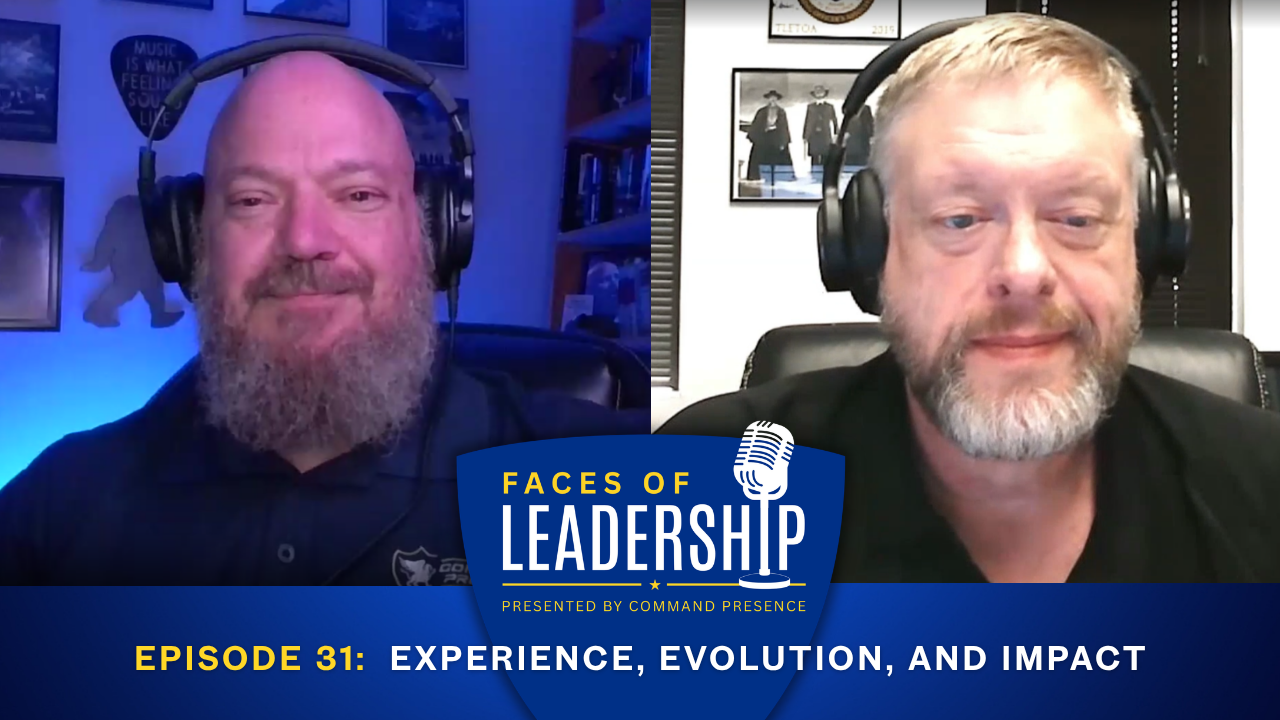
Experience, Evolution, and Impact
Great leaders don’t stop learning when they earn the title—or when they leave it behind. Staying relevant requires a continued commitment to learning, evolving, and finding new ways to make an impact.
In Episode 31 of the Faces of Leadership Podcast, host Michael Warren welcomes Craig Hamilton, a law enforcement training leader, educator, and public safety executive with more than 30 years of experience in the profession.
Craig currently serves as Director of Training for Blue Line Solutions and as a Reserve Deputy Sheriff with the Bradley County Sheriff’s Office. His career has spanned patrol, academy leadership, command-level service, higher education, statewide program development, and law enforcement training. He previously served as Deputy Chief of Police and Deputy Director of Public Safety at the University of Tennessee at Chattanooga and as Director of the Cleveland State Community College Law Enforcement Training Academy.
Together, Michael and Craig explore the lessons that come from a career spent developing officers, instructors, and leaders—and why some of the most important leadership lessons have little to do with rank.
They discuss Craig’s early work building and leading a law enforcement academy, the value of surrounding yourself with talented people,and why effective training requires more than transferring information. From peer leadership and instructor credibility to modeling the behaviors we expect from others, the conversation examines the influence trainers and leaders carry whether they recognize it or not.
The conversation also explores the responsibility law enforcement professionals have to continue evolving as the profession changes. Michael and Craig discuss officer safety, legal knowledge, emotional intelligence,organizational culture, Below 100, and the importance of remaining a student throughout your career.
Whether you're an officer, trainer, supervisor, command-level leader, or someone whose formal law enforcement career is nearing its end, Episode 31 challenges a simple assumption: your opportunity to contribute does not end when your position changes.
Impact may look different throughout a career. The responsibility to keep learning, developing others, and staying relevant remains.
In this episode:
• Why leadership can begin long before rank or formal authority
• The role peer influence plays in developing stronger officers and organizations
• Why trainers must model the behaviors they expect from others
• Lessons from Craig’s experience leading a law enforcement training academy
• How legal knowledge, communication, and emotional intelligence contribute to oficer safety
• Why training must continue to evolve alongside the profession
• The connection between leadership, culture, accountability, and officer safety
• How Below 100 continues to influence Craig’s approach to training and leadership
• Why lifelong learning matters at every stage of a law enforcement career
• Finding new ways to contribute and remain relevant after retirement
Throughout the conversation, Craig and Michael also explore mentorship, instructor development, the responsibility of being visible as a leader, and the value of learning from the people around you. Craig shares lessons from more than three decades in law enforcement and explains why his work today remains grounded in a simple purpose: helping officers make better decisions, become stronger leaders, and go home safely.
Episode 31 is a reminder that leadership is not confined to a position or a particular stage of your career. If you want to continue making an impact, you have to continue learning, evolving, and finding ways to remain relevant.
The Standard Starts with You
Great performance in critical moments doesn’t happen by accident. It is built long before the moment arrives—through leadership, preparation, high expectations, and intentional training.
In Episode 30 of the Faces of Leadership Podcast, The Standard Starts with You, host Michael Warren welcomes Assistant Chief Tom Sloan of the Round Rock Police Department for a conversation presented by Command Presence Training.
A United States Marine Corps veteran, FBI National Academy graduate, and experienced law enforcement leader, Tom has built a career around service, continuous development, and preparing people to perform at their best. His journey has taken him from cattle ranches in Australia and West Texas to serving as an embedded combat correspondent in Iraq, joining the Round Rock Police Department, serving in numerous operational and leadership roles, and helping shape law enforcement initiatives across Texas.
Together, Michael and Tom explore the experiences that shape leaders, the importance of self-mastery, and why effective leadership requires seeing not only who people are today—but who they are capable of becoming. They also examine the responsibility agencies have to intentionally develop their people. From identifying informal leaders and preparing new supervisors to building internal leadership development programs and investing in realistic training, the conversation reinforces a fundamental principle: when the critical moment arrives, people will rely on what their organization prepared them to do.
Whether you're an officer, trainer, supervisor, command-level leader, or someone preparing for your next leadership opportunity, this episode challenges you to examine how intentionally you are developing yourself—and the people entrusted to your leadership.
In this episode:
• Why effective leadership begins with self-mastery
• How high expectations can drive higher performance
• Recognizing and developing influential informal leaders
• Preparing supervisors for leadership beyond operational responsibilities
• How Round Rock PD developed its internal Leadership Development Academy
• Lessons from the FBI National Academy and the power of professional networks
• Why realistic, stress-based training prepares officers for critical incidents
• Why training should be viewed as an investment—not an expense
Throughout the conversation, Tom and Michael also explore the difference between being nice and being kind as a leader, the importance of lifelong learning, the influence leaders have even when they don't realize it, and the responsibility to prepare the next generation for what comes next. From developing people before they hold a title to preparing officers before they face a critical incident, Episode 30 is a reminder that leadership is built before the moment—and preparation is what allows people to perform when that moment arrives.
Build the People. Change the Culture.
Faces of Leadership Podcast | Episode 29
What does more than 50 years in public safety teach you about leadership, culture, and investing in people?
In Episode 29 of the Faces of Leadership Podcast, presented by Command Presence Training, host Michael Warren sits down with Flagler County Sheriff Rick Staly, whose career in Florida law enforcement began in 1975.
First elected Sheriff in 2016 and now serving his third term, Sheriff Staly leads more than 375 employees and manages a $58 million budget. His career has spanned municipal policing, more than two decades with the Orange County Sheriff’s Office—where he rose to Undersheriff—private-sector business ownership, and executive leadership at the Flagler County Sheriff’s Office.
He is also the recipient of the Medal of Valor, Sheriff’s Purple Heart Medal, and Florida Governor’s Medal of Heroism after being shot three times while saving the life of another deputy.
In this episode, Michael and Sheriff Staly explore the lessons behind a lifetime of leadership—and why developing great organizations starts with developing great people.
In this episode, you’ll learn:
• Why investing in people delivers the greatest return
• Empowering employees without micromanaging
• How mentorship can shape an entire career
• Building relationships and keeping ego out of leadership
• Why leaders must challenge “we’ve always done it this way”
• Adapting training and leadership for new generations
• Connecting everyday responsibilities to a larger organizational vision
• Why better training leads to greater confidence and better decision-making
• Transforming organizational culture through vision, resources, and accountability
• Investing in corrections as an essential part of the public safety mission
• Sheriff Staly’s decision to put decades of leadership lessons into a book and pay that knowledge forward
From taking calculated risks to transforming an agency, Sheriff Staly shares a leadership philosophy built on empowering people, investing in training, embracing change, and making sure every member of the organization understands how their work contributes to the mission.
Whether you’re an agency executive, supervisor, trainer, corrections professional, emerging leader, or someone committed to becoming a stronger leader, this conversation offers practical lessons shaped by more than half a century of public safety experience.
🎧 Watch Episode 29 of Faces of Leadership and subscribe for more conversations with leaders shaping the future of public safety.
👍 If you enjoyed this episode, please Like, Subscribe, and share it with someone committed to building stronger leaders, stronger organizations, and a stronger future for public safety.

Beyond Compliance: Building Credibility Through Leadership
Leadership isn't built through policies alone. It's built through trust, credibility, and a commitment to continuous improvement.
In Episode 28: Beyond Compliance: Building Credibility Through Leadership of the Faces of Leadership Podcast, presented by Command Presence Training, host Michael Warren welcomes Kevin Rhea, Founder and Executive Director of the National Association for Accreditation Leadership (NAAL).
A retired law enforcement sergeant with more than 30 years of experience, Kevin has dedicated his career to advancing accreditation, leadership development, and organizational excellence across public safety.Together, Michael and Kevin explore why accreditation should be viewed as far more than a compliance exercise. From policy development and training to personal branding and professional growth, they discuss how intentional leadership builds stronger organizations, strengthens public trust, and creates lasting organizational culture.
Whether you're a chief, supervisor, accreditation manager, trainer, or aspiring leader, this episode offers practical insights into developing both stronger leaders and stronger agencies.
In this episode:
• Why accreditation should be a leadership tool—not just a checklist
• The connection between policy, training, and organizational credibility
• Building trust through professional standards and accountability
• Developing your personal leadership brand
• Why continuous learning is every leader's responsibility
• The future of accreditation leadership across public safety
• How NAAL is advancing leadership and professional development
• Investing in people to build stronger organizations

Connecting Technology to Mission
Technology has transformed public safety, but implementing it successfully requires more than buying the latest solution. It requires leadership.
In Episode 27: Connecting Technology to Mission of the Faces of Leadership Podcast, presented by Command Presence Training, host Michael Warren welcomes Rusty Byers, Marine Corps veteran and public safety technology leader, for an engaging conversation about how technology, leadership, and organizational culture work together to strengthen mission success.
With more than three decades serving the public safety profession, Rusty shares lessons learned from military service, law enforcement technology, and organizational leadership. Together, he and Michael explore why successful technology implementation has far less to do with software—and far more to do with people, communication, trust, and leadership.
Whether you're leading a police department, corrections agency, communications center, or public safety organization, this episode offers practical insights into navigating change while keeping your mission—and your people—at the center of every decision.
In this episode:
• Leadership lessons from the U.S. Marine Corps
• Why technology succeeds—or fails—in public safety
• Managing organizational change without losing your people
• The importance of listening before implementing new technology
• Building trust between leadership, operations, IT, and vendors
• Creating long-term technology strategies instead of chasing the latest trends
• The future of integrated public safety solutions
• Preparing agencies for the challenges ahead
Join Command Presence and Strategic Communications for an engaging two-day retreat focused on innovative leadership strategies for public safety professionals
September 16–17, 2026
Charleston, South Carolina