
The Faces of Leadership, presented by the Command Presence Leadership Institute, believes that leadership is about two things – people and action. Leaders from across society are interviewed to discover what drives them, what makes them effective, and what the impact is of the leadership they provide.
Listen On:


Experience, Evolution, and Impact
Great leaders don’t stop learning when they earn the title—or when they leave it behind. Staying relevant requires a continued commitment to learning, evolving, and finding new ways to make an impact.
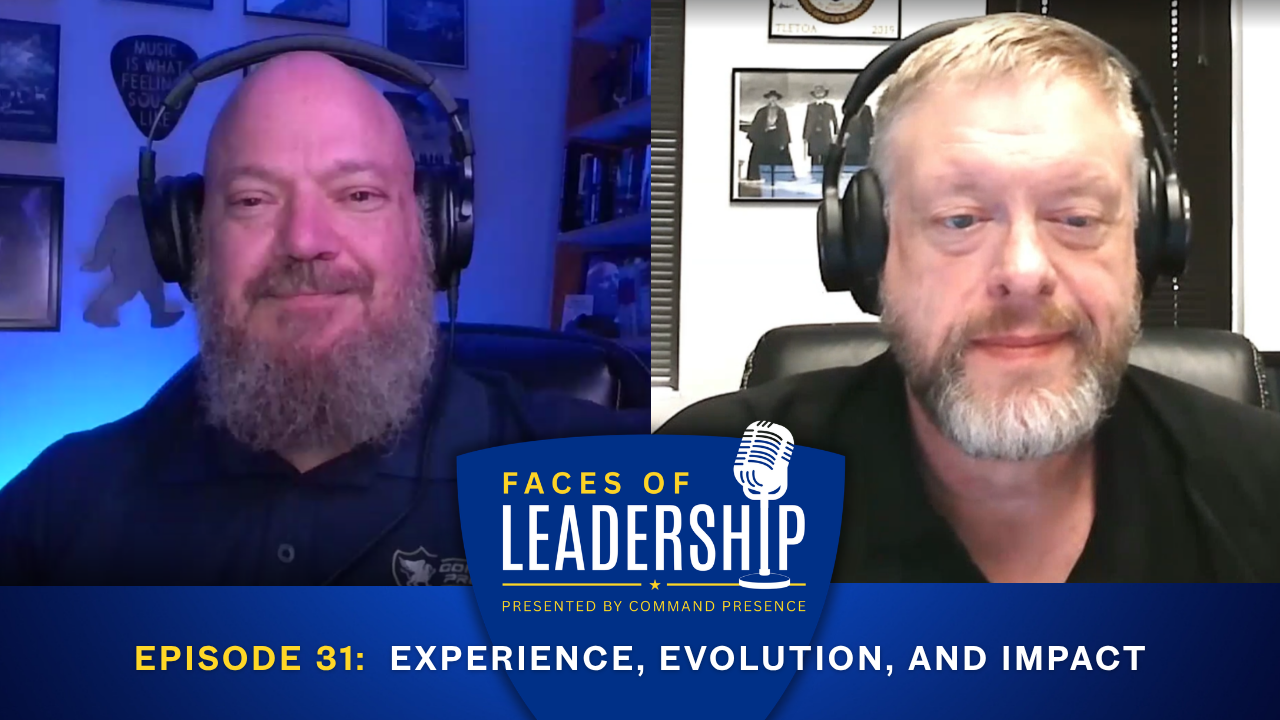
In Episode 31 of the Faces of Leadership Podcast, host Michael Warren welcomes Craig Hamilton, a law enforcement training leader, educator, and public safety executive with more than 30 years of experience in the profession.
Craig currently serves as Director of Training for Blue Line Solutions and as a Reserve Deputy Sheriff with the Bradley County Sheriff’s Office. His career has spanned patrol, academy leadership, command-level service, higher education, statewide program development, and law enforcement training. He previously served as Deputy Chief of Police and Deputy Director of Public Safety at the University of Tennessee at Chattanooga and as Director of the Cleveland State Community College Law Enforcement Training Academy.
Together, Michael and Craig explore the lessons that come from a career spent developing officers, instructors, and leaders—and why some of the most important leadership lessons have little to do with rank.
They discuss Craig’s early work building and leading a law enforcement academy, the value of surrounding yourself with talented people,and why effective training requires more than transferring information. From peer leadership and instructor credibility to modeling the behaviors we expect from others, the conversation examines the influence trainers and leaders carry whether they recognize it or not.
The conversation also explores the responsibility law enforcement professionals have to continue evolving as the profession changes. Michael and Craig discuss officer safety, legal knowledge, emotional intelligence,organizational culture, Below 100, and the importance of remaining a student throughout your career.
Whether you're an officer, trainer, supervisor, command-level leader, or someone whose formal law enforcement career is nearing its end, Episode 31 challenges a simple assumption: your opportunity to contribute does not end when your position changes.
Impact may look different throughout a career. The responsibility to keep learning, developing others, and staying relevant remains.
In this episode:
• Why leadership can begin long before rank or formal authority
• The role peer influence plays in developing stronger officers and organizations
• Why trainers must model the behaviors they expect from others
• Lessons from Craig’s experience leading a law enforcement training academy
• How legal knowledge, communication, and emotional intelligence contribute to oficer safety
• Why training must continue to evolve alongside the profession
• The connection between leadership, culture, accountability, and officer safety
• How Below 100 continues to influence Craig’s approach to training and leadership
• Why lifelong learning matters at every stage of a law enforcement career
• Finding new ways to contribute and remain relevant after retirement
Throughout the conversation, Craig and Michael also explore mentorship, instructor development, the responsibility of being visible as a leader, and the value of learning from the people around you. Craig shares lessons from more than three decades in law enforcement and explains why his work today remains grounded in a simple purpose: helping officers make better decisions, become stronger leaders, and go home safely.
Episode 31 is a reminder that leadership is not confined to a position or a particular stage of your career. If you want to continue making an impact, you have to continue learning, evolving, and finding ways to remain relevant.
Faces of Leadership
Under Pressure
In this episode, host Michael Warren welcomes Kelton Faught, co-founder of Under Pressure Services, LLC. They discuss the dual nature of leadership involving people and actions, and explore how Kelton's journey in entrepreneurship and leadership has transformed him personally and professionally. Kelton shares his pursuit of leadership through personal growth, balancing business and family life, and helping others achieve the same success. The episode dives deep into key philosophies such as the importance of passion and collaboration over competition. Kelton's experience resonates with practical insights on leadership and entrepreneurship, underscoring the significance of becoming the leader we aspire to have.
People First
Join host Michael Warren as he interviews David Bezzant, the national vice president of T-Mobile for government. This episode dives into leadership principles, technology's rapid advancement, T-Mobile's commitment to community and first responders, and the VA's Telehealth project. David shares insights from his career in wireless communications and his personal venture into urban fruit farming. Learn how T-Mobile's initiatives impact millions and the importance of putting people first in both professional and personal life.
Ripple Effects
In this episode of The Faces of Leadership, host Michael Warren sits down with Kristen Bouck Kemp, co-owner and CEO of MACNLOW Associates. They discuss the vital aspects of leadership in public safety, emphasizing the importance of people and actions. Kristen shares insights from her extensive career, including her experience with law enforcement training and her time as Executive Director of the Ingham County Bar Association. The conversation also highlights the significant impact of public safety professionals and the resilience required to handle traumatic events. Tune in to hear about the challenges and triumphs of leading in the public safety sector, the importance of continuous learning, and the power of love in leadership. Don't miss the inspiring stories from Kristen's personal and professional life, including a heartfelt discussion about her daughter’s courageous move to California and the collective effort to improve public safety training.
Real Time
In this episode, host Michael Warren welcomes Chief John Robison, the Public Safety Chief of Alpharetta, Georgia. Chief Robison shares his extensive experience in law enforcement and leadership, emphasizing the importance of transformational leadership, intentional and opportunistic development, and the power of effective communication. The discussion explores topics such as the benefits of outside perspectives, dealing with organizational challenges, and the pivotal role of sharing information to empower teams. Chief Robison also highlights the significance of continual learning and development within an organization, sharing his journey in writing his book 'A Compelling Force: Leadership' and the lessons he's gathered from his career and historical leaders. Tune in for valuable insights on becoming the leader you wish you had.
New Beginnings
In this episode of the Faces of Leadership podcast, host Michael Warren interviews retired U.S. Navy commander and Amazon Web Services executive, Karen Brasch. They discuss her 20-year career as a Naval aviator, the impact of her father's encouragement, and her transition into the tech industry. Karen shares insights on leadership, the importance of belief and commitment, and the value of volunteering. The episode offers powerful lessons on pushing boundaries, embracing change, and the significance of teaching moments both in leadership and parenting.
The Heart of the Matter
In this episode, we explore the critical intersection of leadership and health within the public safety community. Michael welcomes Dr. Benjamin Stone, an expert in cardiovascular physiology and co-developer of Sigma Tactical Wellness, an organization dedicated to understanding and reducing coronary disease among law enforcement officers in the U.S. Dr. Stone discusses the alarming statistics on heart disease in public safety professionals, the novel testing methods his organization employs, and the transformative impact of educating officers on their health. He also shares personal anecdotes and professional insights on fostering a culture of health and wellness within these high-risk occupations.