
The Faces of Leadership, presented by the Command Presence Leadership Institute, believes that leadership is about two things – people and action. Leaders from across society are interviewed to discover what drives them, what makes them effective, and what the impact is of the leadership they provide.
Listen On:


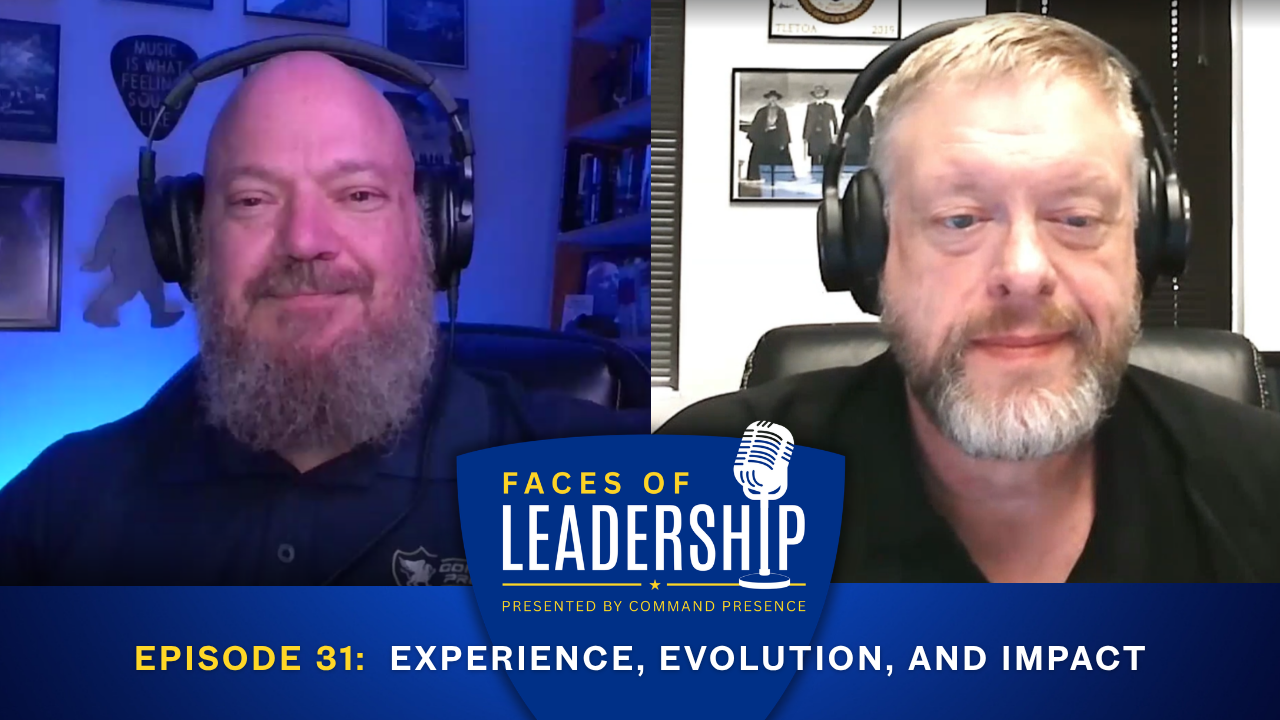
Experience, Evolution, and Impact
Great leaders don’t stop learning when they earn the title—or when they leave it behind. Staying relevant requires a continued commitment to learning, evolving, and finding new ways to make an impact.
In Episode 31 of the Faces of Leadership Podcast, host Michael Warren welcomes Craig Hamilton, a law enforcement training leader, educator, and public safety executive with more than 30 years of experience in the profession.
Craig currently serves as Director of Training for Blue Line Solutions and as a Reserve Deputy Sheriff with the Bradley County Sheriff’s Office. His career has spanned patrol, academy leadership, command-level service, higher education, statewide program development, and law enforcement training. He previously served as Deputy Chief of Police and Deputy Director of Public Safety at the University of Tennessee at Chattanooga and as Director of the Cleveland State Community College Law Enforcement Training Academy.
Together, Michael and Craig explore the lessons that come from a career spent developing officers, instructors, and leaders—and why some of the most important leadership lessons have little to do with rank.
They discuss Craig’s early work building and leading a law enforcement academy, the value of surrounding yourself with talented people,and why effective training requires more than transferring information. From peer leadership and instructor credibility to modeling the behaviors we expect from others, the conversation examines the influence trainers and leaders carry whether they recognize it or not.
The conversation also explores the responsibility law enforcement professionals have to continue evolving as the profession changes. Michael and Craig discuss officer safety, legal knowledge, emotional intelligence,organizational culture, Below 100, and the importance of remaining a student throughout your career.
Whether you're an officer, trainer, supervisor, command-level leader, or someone whose formal law enforcement career is nearing its end, Episode 31 challenges a simple assumption: your opportunity to contribute does not end when your position changes.
Impact may look different throughout a career. The responsibility to keep learning, developing others, and staying relevant remains.
In this episode:
• Why leadership can begin long before rank or formal authority
• The role peer influence plays in developing stronger officers and organizations
• Why trainers must model the behaviors they expect from others
• Lessons from Craig’s experience leading a law enforcement training academy
• How legal knowledge, communication, and emotional intelligence contribute to oficer safety
• Why training must continue to evolve alongside the profession
• The connection between leadership, culture, accountability, and officer safety
• How Below 100 continues to influence Craig’s approach to training and leadership
• Why lifelong learning matters at every stage of a law enforcement career
• Finding new ways to contribute and remain relevant after retirement
Throughout the conversation, Craig and Michael also explore mentorship, instructor development, the responsibility of being visible as a leader, and the value of learning from the people around you. Craig shares lessons from more than three decades in law enforcement and explains why his work today remains grounded in a simple purpose: helping officers make better decisions, become stronger leaders, and go home safely.
Episode 31 is a reminder that leadership is not confined to a position or a particular stage of your career. If you want to continue making an impact, you have to continue learning, evolving, and finding ways to remain relevant.
Faces of Leadership
Leading on the Inside
In this episode, host Michael Warren dives into the challenging world of corrections with guest Michael Cantrell, a veteran with over 30 years of experience in the field. Michael shares invaluable leadership lessons learned from his time working in a dark and often dangerous environment, including the importance of mastering the basics, showing genuine care for your team, and finding your passion within your profession. They discuss the crucial balance between strategic and tactical leadership, the impact of authenticity, and the need for continuous growth and adaptability as leaders. Whether you're in corrections or any other industry, this episode offers profound insights into effective leadership and creating a safe and productive work environment.
Looking Back and Looking Forward
In episode 11, host Michael Warren reflects on the first ten episodes, sharing key learnings from conversations with leaders from various sectors. From overcoming podcast uncertainties to diving deep into the essence of leadership through engaging stories and lessons—this episode provides an insightful review of the journey so far. Michael revisits memorable moments and valuable takeaways from guests ranging from labor market experts to police chiefs, highlighting the core leadership principles: focusing on people and actions. Tune in as Michael also discusses future topics and invites listener input for upcoming episodes.
Serving After You've Clocked Out
Join host Michael Warren in this milestone 10th episode of 'Faces of Leadership'. Today’s guest, Chief Dave Ogden, shares insights from his 37-year career in law enforcement, emphasizing the importance of continual learning, community service, and preparing for life beyond policing. From leading in high-risk situations to fostering a culture of volunteerism and spiritual wellness, Chief Ogden’s journey exemplifies the values of honor, integrity, and service. Discover how his transformational leadership at the Windermere Police Department builds trust and purpose, ensuring a lasting positive impact long after retirement.
Training the Brain to Learn
In this episode, host Michael Warren talks with Rich Carr, CEO of Carr Knowledge and creator of the Education Engine, about the science of brain-centric learning. They discuss the significance of brain-based methodologies in improving training and retention within organizations. Rich explains how presenting information in alignment with brain processing can lead to better understanding and engagement. He highlights the importance of breaking down complex topics into smaller, digestible parts and using surprise to maintain attention. The conversation also touches on creating an effective learning environment and measuring success by the learners' retention and understanding.
Leading Those Who Answer the Call
Join Michael Warren as he delves into leadership principles and the often-overlooked role of 911 dispatch centers in public safety. Featuring an insightful conversation with Jamison Peevyhouse, Vice President for Public Safety at RapidSOS, this episode explores the essential elements of leadership, the significance of training and hiring for culture, and the future of emergency response technology. Michael and Jamison discuss how effective leadership is about influencing and supporting your team, preparing for future challenges, and ensuring the right data reaches the right hands to save lives. Tune in to learn how true leadership can transform organizations and directly impact community safety.
Mentoring the Aspirational Professional
Join Michael Warren as he sits down with Victor Lauria, the Criminal Justice Department Chair at Madonna University. They discuss the importance of staying relevant in both leadership and education, the challenges and rewards of preparing students for careers, and the significance of providing proper tools and training. Victor shares his experiences from his law enforcement career and how those lessons apply to his current role in academia. Whether you are in law enforcement, education, or another field, this episode offers valuable insights into leadership, mentorship, and the pursuit of excellence.