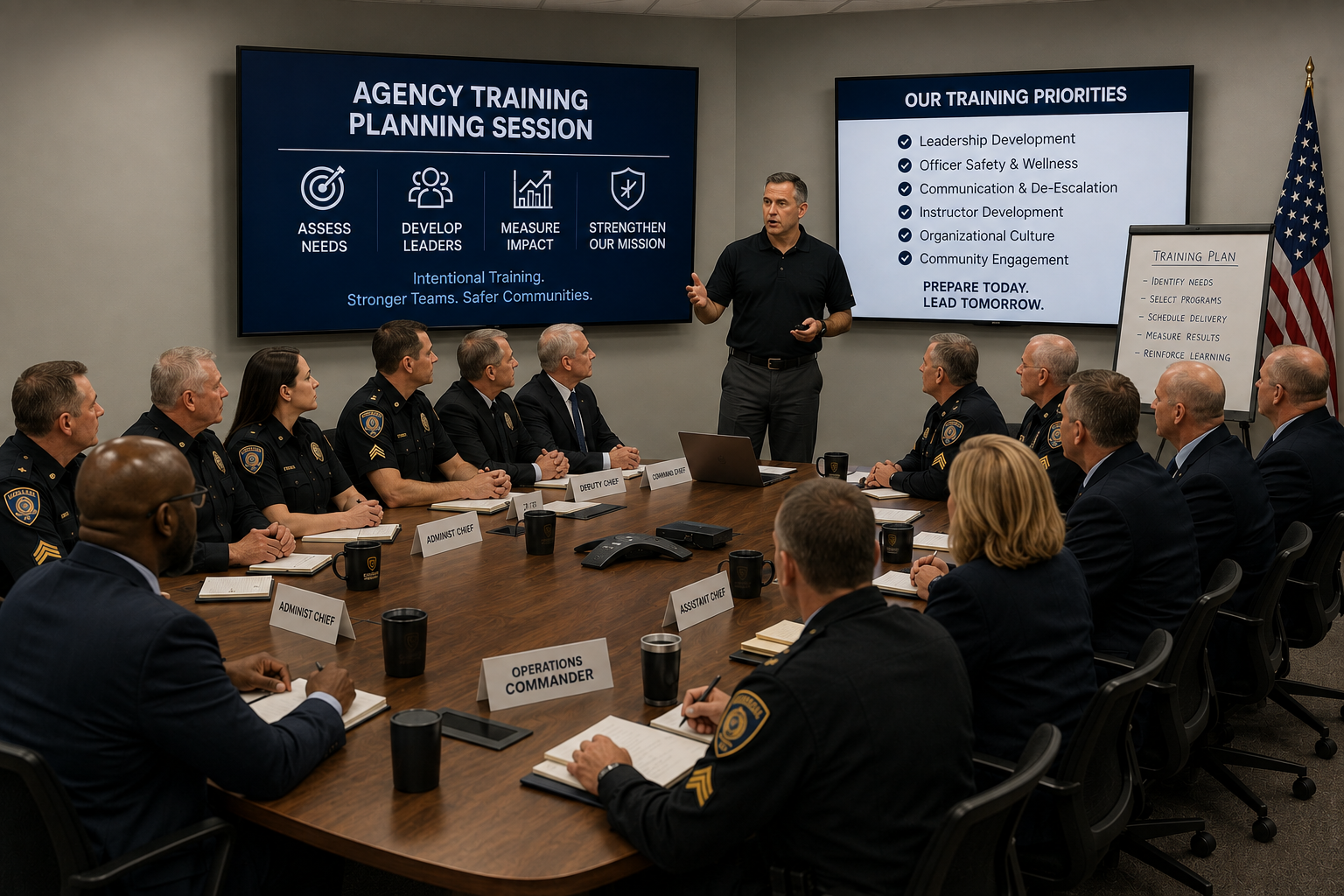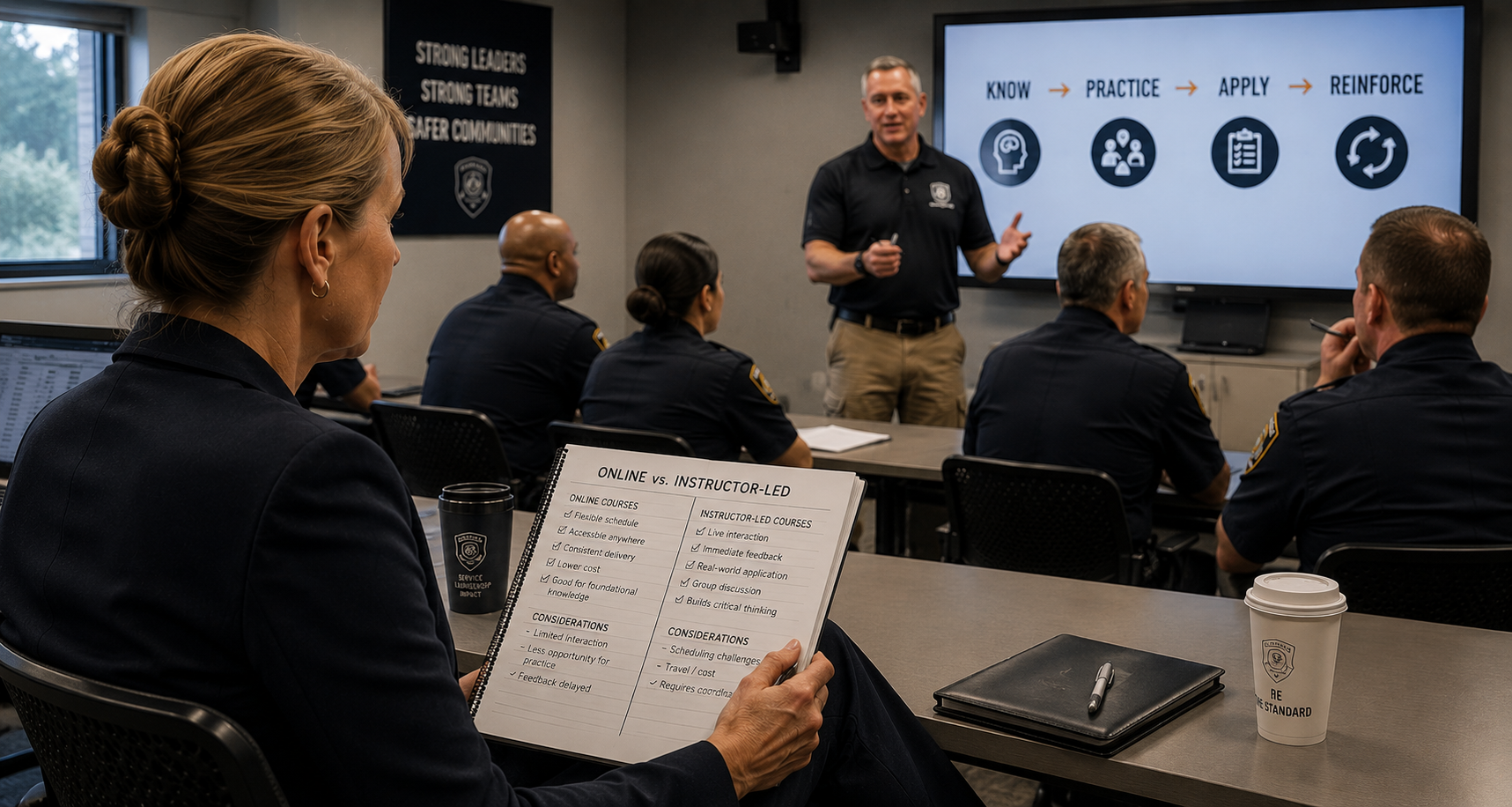
Training Coordinators and HR Administrators carry a significant responsibility: choosing training that actually moves the needle for their agency. With shrinking budgets, POST requirements, increasing liability concerns, and pressure from command staff to “prove the ROI,” selecting the right training partner is no longer a logistical task — it’s a strategic decision that directly impacts performance, morale, and public trust.
The challenge? The market is saturated with vendors offering quick fixes, online-only lessons, or programs that check a box but do little to inspire real behavior change. Evaluating vendors effectively ensures your agency invests in training that strengthens people, improves communication, and builds safer, more capable teams.
This practical checklist gives you a clear, steady framework to assess any law enforcement training vendor — and choose the partner who aligns with your mission to serve the public with clarity, confidence, and professionalism.
1. Verify POST Certification and Accreditation
POST certification remains one of the most reliable indicators of instructional quality and accountability in law enforcement training. A credible vendor should provide documentation that courses meet state standards and follow recognized instructional practices.
Why this matters:
POST certification ensures training hours count toward required in-service needs and signals that the curriculum has been vetted for relevance, accuracy, and instructional integrity.
What to look for:
- Proof of POST approval
- States where courses are certified
- Clear documentation of curriculum
Red flags:
- “Pending approval” with no timeline
- No accreditation listed on the vendor’s website
- Generic or outdated course content
2. Confirm Real-World Instructor Experience
In law enforcement, credibility drives learning. Officers engage more deeply when instructors have walked the same ground — responding to calls, leading teams, managing crises, and navigating the realities of the job.
Training Coordinators should prioritize vendors whose instructors bring experience at multiple levels, from patrol to command staff. On-the-ground experience directly influences the quality of examples, scenarios, and leadership insights shared in class.
Questions to ask vendors:
- What field experience do your instructors have?
- Have they served in supervisory or command roles?
- Are they trained in adult learning and instructional design?
Look for instructors who demonstrate humility, service-minded leadership, and a commitment to helping others grow.
3. Examine the Curriculum for Evidence-Based, Adult-Learning Practices
Quality training goes beyond PowerPoints and lecture-based instruction. Effective law enforcement training blends adult-learning science with realistic, scenario-driven practice. Your vendor should be able to articulate the “why” behind their instructional strategies.
High-quality curriculum includes:
- Interactive exercises
- Scenario-based practice
- Leadership principles woven throughout
- Opportunities for reflection and coaching
Training Coordinators often struggle with vendors whose programs feel “off-the-shelf” or disconnected from agency culture. Ask for sample lesson plans, learning objectives, and instructional methodologies to ensure the curriculum is built for practical impact — not passive consumption.
4. Request Clear, Measurable Learning Outcomes
Most agencies don’t need more certificates. They need behavior change.
A strong training vendor will define learning outcomes that can be measured on shift, not just in the classroom. This is essential for Training Coordinators who must justify expenditures and demonstrate ROI to command staff.
Agencies that track clear law enforcement training ROI metrics gain a more accurate picture of whether leadership behaviors, communication, and decision-making are actually improving on shift.
Examples of measurable outcomes:
- Improved communication across shifts
- Increased initiative and problem-solving
- Decreases in internal conflict
- More consistent supervisory behavior
- Morale improvements based on peer feedback
When a vendor cannot articulate how they measure success, it’s likely the training relies on attendance hours rather than transformation.
5. Review Evaluation Tools and Post-Course Support
Training doesn’t end when the class concludes — or it shouldn’t.
Ask whether the vendor provides tools to measure progress after the course, such as:
- Officer self-assessments
- Supervisor observations
- Behavior checks at set intervals
- Metrics tied to communication or leadership outcomes
Effective vendors understand that learning is sustained through reinforcement. Look for those who offer follow-up resources, refreshers, or structured touchpoints that help training “stick.”
6. Assess Vendor Transparency and Cultural Fit
Great training strengthens your culture; poor training can undermine it.
A training partner should demonstrate professionalism, clarity, and a steady commitment to serving your agency’s mission. Transparency around pricing, scheduling, customization, and instructional expectations is essential.
Strong signs of a good fit:
- Clear, steady communication
- Curriculum aligned with agency values
- Willingness to tailor content
- Partnership mindset rather than transaction mindset
Red flags:
- Vague outcomes
- High-pressure sales tactics
- Overpromising results
- Hidden fees or unclear pricing
Training vendors should help you build stronger teams — not just fill seats.
Common Red Flags When Evaluating a Training Vendor
- No POST certification
- Instructors without real-world experience
- Lecture-heavy, outdated curriculum
- No defined metrics for evaluating impact
- Overreliance on passive, online-only modules
- Limited transparency around pricing or content
If you notice these signs, your agency may end up with training that consumes budget without contributing to readiness, professionalism, or morale.
What an Effective Training Partner Should Deliver
Quality training vendors share several traits that consistently support law enforcement agencies:
- Instructors with on-the-ground experience
- Evidence-based curriculum grounded in leadership and communication
- Measurable learning outcomes tied to real performance
- Mission-first approach, focused on empowering those who serve
- True partnership, helping your agency strengthen culture and communication
Keeping these priorities in focus helps your agency choose training that builds capable, confident leaders at every level.
When agencies partner with Command Presence, they get more than a class — they get a training approach built to elevate performance, strengthen morale, and support the leaders who carry the mission forward. If you’re reviewing vendors or refining your training strategy, our team can help you map the right path and identify the courses that deliver lasting impact.
See How We Train Leaders:
View our training calendar
Host a course