One of the biggest misconceptions in law enforcement is that leadership begins with promotion.
It doesn't.
After working with thousands of public safety professionals across North America, we've noticed a consistent pattern: the officers who become exceptional supervisors rarely wait until they earn rank to begin developing leadership skills. They start long before promotion becomes part of the conversation.
That's because leadership isn't something that's handed to you with a new badge or a different patch on your collar.
It's something you practice.
Every shift.
Every conversation.
Every decision.
Promotion may give you authority, but leadership earns you influence. The best supervisors have both.
If you're waiting until you become a sergeant to start learning how to lead, you're waiting too long. The habits that define great leaders—communication, accountability, emotional intelligence, humility, and service—are built over time. They're developed through intentional effort long before you're responsible for leading a squad.
So, how do you know if you're ready for leadership training?
Leadership Development Starts Long Before Promotion
Most agencies promote officers because they've demonstrated technical competence.
They know the job.
They're dependable.
They make good decisions under pressure.
Those qualities matter.
But technical competence and leadership competence aren't the same thing.
Leading people requires a different set of skills. It means coaching instead of correcting. Listening before speaking. Building trust before asking for accountability. Creating consistency when situations become uncertain.
Those skills aren't developed overnight.
That's why the strongest agencies don't wait until promotion to invest in leadership development. They intentionally prepare officers before additional responsibility arrives.
The result isn't just better supervisors.
It's stronger teams, healthier organizational culture, and a leadership pipeline that's prepared for the future instead of reacting to it.
Leadership isn't a destination you reach after promotion.
It's a discipline you begin practicing long before anyone changes your title.
People Already Trust Your Judgment
Think about the officers you've respected throughout your career.
Chances are, they weren't respected because of their rank.
They were respected because people trusted them.
When difficult calls came in, they stayed composed.
When younger officers had questions, they were approachable.
When emotions ran high, they brought clarity instead of confusion. That's leadership.
If teammates consistently seek your advice, ask for your perspective, or rely on your judgment, you're already influencing the people around you.
The question isn't whether you're leading.
The question is whether you're intentionally developing the skills that make your leadership even more effective.
Natural influence is valuable.
Intentional leadership is transformational.
Leadership training gives officers practical tools to communicate more effectively, navigate conflict, build trust, and strengthen the relationships that make high-performing teams possible.
It doesn't create leaders.
It develops the leadership potential that's already there.
You're Thinking Like a Leader—Not Just an Officer
At some point, something changes.
You stop focusing only on your own responsibilities.
You start paying attention to the bigger picture.
Instead of asking, "Did I do my job well today?"
you begin asking, "How can we become better tomorrow?"
You notice communication gaps between shifts.
You look for opportunities to mentor newer officers.
You think about morale.
You care about how decisions affect the entire team—not just your own assignment.
That's the mindset of an emerging leader.
Leadership isn't about having all the answers.
It's about accepting responsibility for making the team better.
We've found that officers who naturally think this way often become the supervisors who strengthen agency culture because they were already invested in something larger than themselves.
That's one of the reasons Command Presence developed the Leadership Series. Leadership shouldn't begin after promotion. It should grow alongside your career so that when new opportunities arrive, you're prepared to lead with confidence rather than simply learning through trial and error.
You Measure Success by the Growth of Others
One of the clearest signs of leadership potential has nothing to do with your own performance.
It has everything to do with how you invest in the people around you.
Do you take time to help a newer officer after a difficult call?
Do you share lessons you've learned instead of letting others repeat your mistakes?
Do you encourage teammates when they need confidence and challenge them when they need accountability?
If so, you've already begun doing one of the most important jobs a leader has.
Developing people.
Great leaders don't create followers.
They create more leaders.
That's one of the defining principles behind Leading Without Rank: The Emerging Leader.
The course isn't designed to teach officers how to supervise.
It's designed to help them build influence, strengthen communication, develop confidence, and lead through service long before promotion becomes part of their career path.
Because when officers learn to invest in others before they have authority, they become the kind of supervisors people genuinely want to follow.
You Bring Calm When Others Feel Pressure
Every officer experiences pressure.
Not every officer creates confidence.
One of the clearest signs of leadership potential is how people respond when situations become uncertain.
When emotions rise, do you help lower the temperature?
When information is limited, do you communicate clearly instead of adding confusion?
When a newer officer is struggling, do you become a source of stability instead of another source of stress?
Leadership isn't about having all the answers.
It's about helping others move forward when the answers aren't immediately clear.
We've seen officers with decades of experience create unnecessary chaos because they couldn't manage their own emotions. We've also seen young officers earn the respect of an entire shift because they remained steady when everyone else felt overwhelmed.
People remember how leaders make them feel during difficult moments.
Calm is contagious.
So is panic.
The good news is that composure, communication, and decision-making under pressure are skills that can be developed. Leadership training provides practical tools to strengthen those skills before you're responsible for leading an entire team.
You're Investing in Growth Before Anyone Requires It
Here's one of the simplest ways to recognize an emerging leader.
They don't wait to be told to grow.
They're reading.
They're asking questions.
They're looking for mentors.
They're attending training.
They're looking for ways to improve—not because someone ordered them to, but because they understand that growth is part of the profession.
That's a different mindset.
Promotion doesn't suddenly create a desire to learn.
The desire to learn is often what leads to promotion.
Some officers see training as a requirement.
Future leaders see it as an opportunity.
They know every course, every difficult conversation, every mentor, and every challenge helps prepare them for greater responsibility down the road.
That's why leadership development isn't about checking a box.
It's about building habits that last an entire career.
Leadership Doesn't Begin With Promotion—It Begins With a Decision
The five signs we've discussed all point to one conclusion.
Leadership isn't defined by rank.
It's defined by responsibility.
Responsibility for your own growth.
Responsibility for the people around you.
Responsibility for making your team stronger than it was yesterday.
If these signs describe where you are today, don't wait for someone else to decide you're ready.
Start developing the skills now.
That's exactly why Command Presence created Leading Without Rank: The Emerging Leader.
The course was built for officers who want to strengthen communication, influence, accountability, and leadership before promotion—not after.
Because when opportunity arrives, preparation matters.
If you're ready to continue developing as a leader, explore our Leadership Series Courses, review the upcoming Training Calendar.
Frequently Asked Questions
When should officers begin leadership training?
The best time to begin leadership development is before promotion. Officers who build communication, decision-making, mentorship, and accountability skills early are often better prepared when leadership opportunities arise.
Do I need to be a supervisor before attending leadership training?
No.
Some of the strongest leaders begin developing leadership habits years before becoming supervisors. Courses designed for emerging leaders help officers build influence, confidence, and communication skills that benefit them throughout their careers.
What leadership skills should officers focus on first?
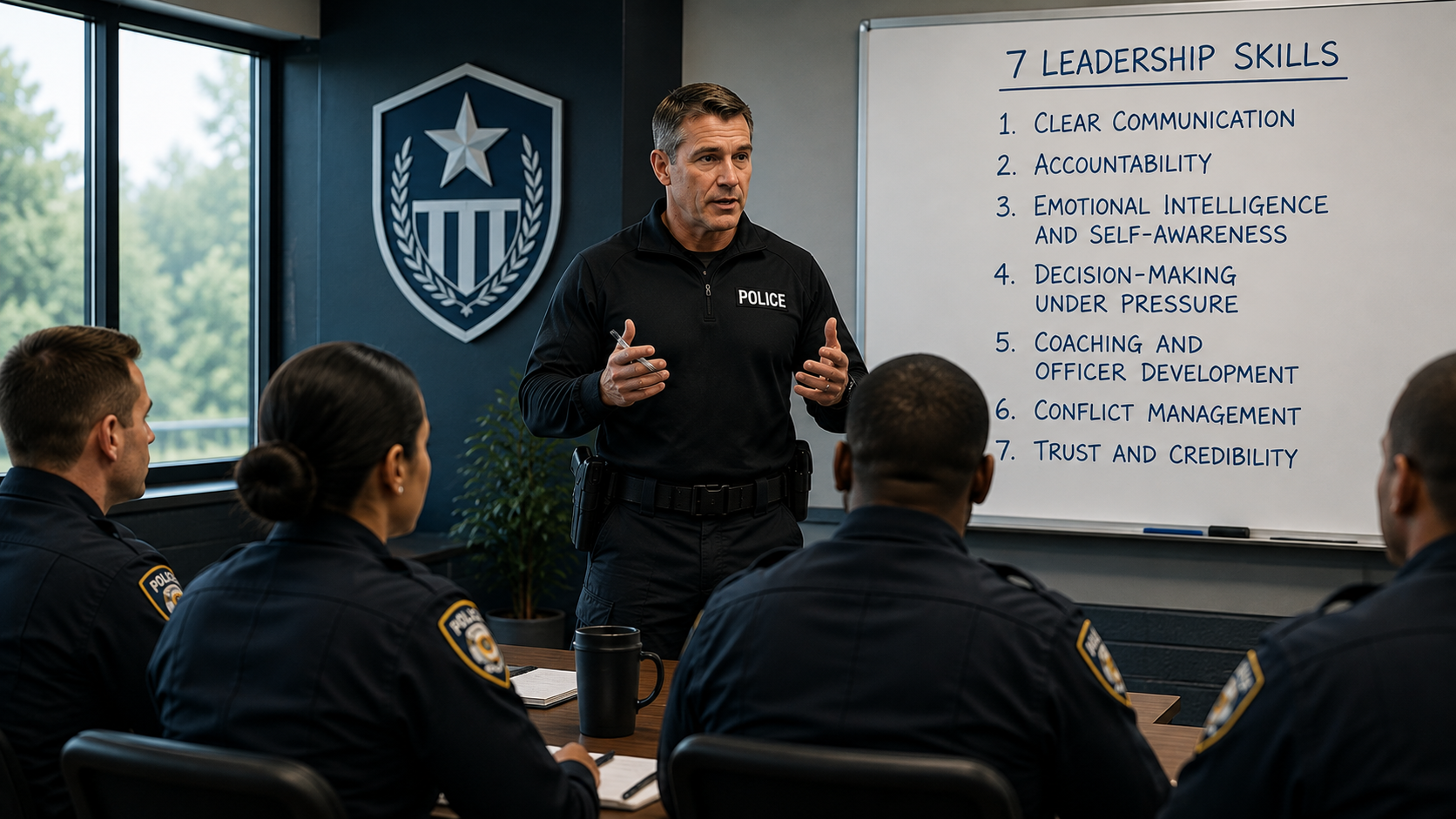
Before promotion, officers should focus on communication, emotional intelligence, accountability, mentorship, decision-making, and building trust with their teammates. These skills create the foundation for effective supervision later in a career.