Annual training should do more than fill a calendar or satisfy minimum requirements. It should prepare officers and supervisors to make sound decisions, perform consistently, and respond effectively to the challenges their agency faces.
For law enforcement leaders, that requires a deliberate approach to planning. Training coordinators must account for mandatory requirements, staffing limitations, budgets, and changing operational needs. At the same time, they need to identify where additional training can improve performance.
An annual law enforcement training plan brings those priorities together.
The most effective plans connect training decisions to actual agency needs, establish realistic schedules, and create a way to evaluate whether the training is making a difference.
What Is an Annual Law Enforcement Training Plan?
An annual law enforcement training plan is a 12-month framework that identifies an agency's required training, operational priorities, professional development needs, training schedule, and methods for evaluating results.
It provides a structured approach to answering five questions:
- What training must our personnel complete?
- Where are officers and supervisors experiencing performance gaps?
- Which skills and capabilities should we prioritize?
- How will we deliver training without unnecessarily disrupting operations?
- How will we know whether the training improved performance?
A strong plan accounts for compliance, but it does not stop there. It also addresses the skills, behaviors, and leadership capabilities that influence everyday performance.
What Should an Annual Law Enforcement Training Plan Include?
Although each agency's plan will look different, several components should be addressed before the training calendar is finalized.
Required training and qualifications. Identify applicable state standards, certification requirements, agency policies, and recurring qualifications. Requirements vary by jurisdiction and assignment, so they should be verified against current authoritative guidance.
Agency training priorities. Identify the operational challenges and organizational goals that training is expected to support.
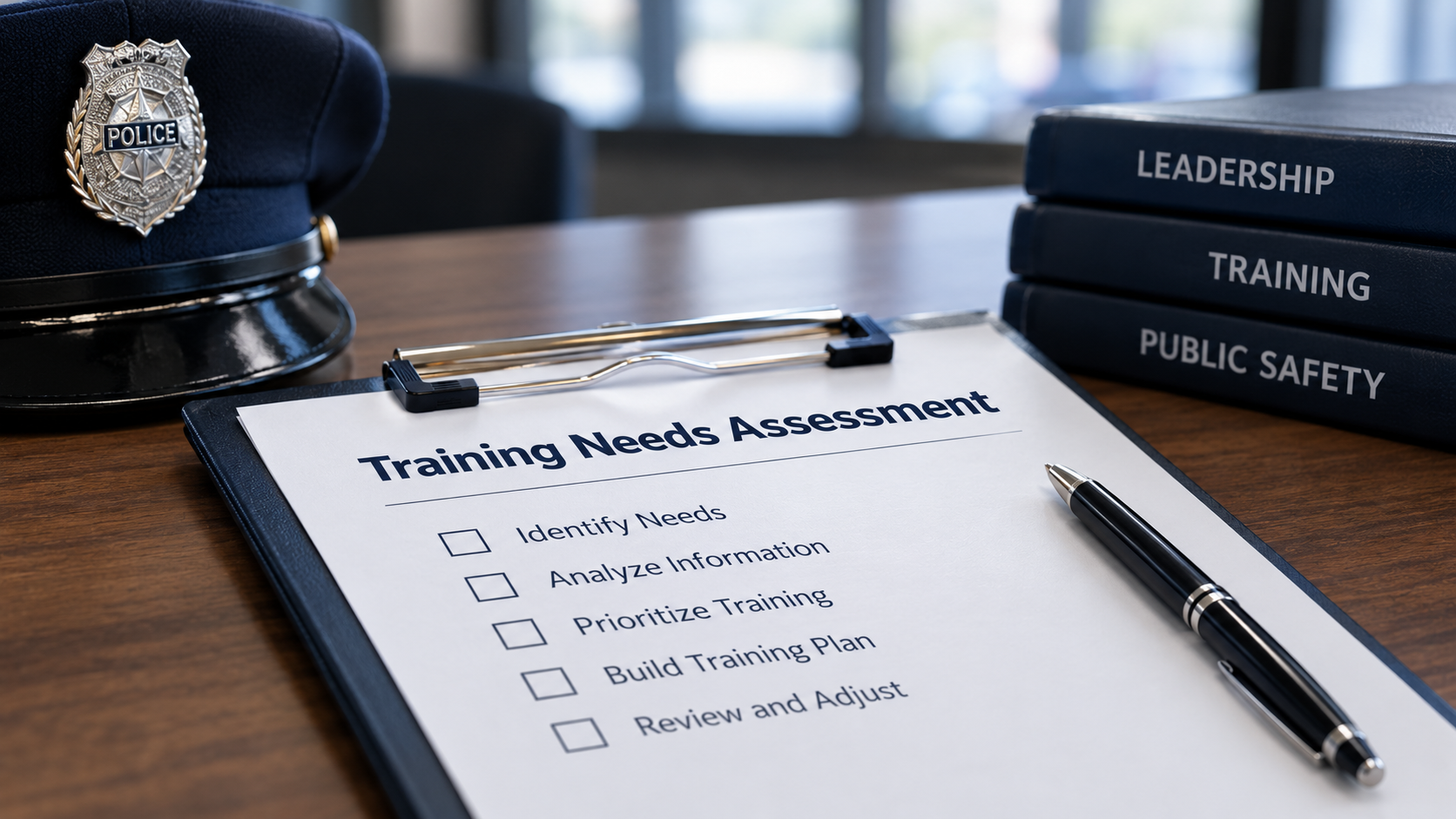
A training needs assessment. Review available evidence to determine where additional knowledge, practice, coaching, or development may be necessary.
A realistic schedule. Account for staffing, shift coverage, instructor availability, training facilities, and budget constraints.
Professional development opportunities. Include development needs for field training officers, instructors, supervisors, and personnel preparing for additional responsibilities.
Performance measures. Establish how the agency will evaluate learning, application, and improvements in identified performance areas.
These elements form the foundation for a practical annual police training plan.
Step 1: Review Training Requirements and Agency Priorities
Start with the training your agency is required to provide.
Review applicable Peace Officer Standards and Training (POST) requirements or equivalent state standards, agency policies, recurring certifications, and assignment-specific qualifications. Confirm which requirements apply to which personnel and when they must be completed.
Mandatory training creates the baseline for the annual schedule. It should not automatically determine every training priority.
Agency leaders should also consider:
- Changes in policies, procedures, or operational responsibilities
- Recurring challenges identified by supervisors
- Training needs associated with new assignments or promotions
- Officer safety and communication concerns
- Leadership and supervisory development needs
- Lessons identified through operational reviews
The objective is to distinguish between training that is required and training that is needed to strengthen performance.
Both matter. A plan that addresses only minimum requirements may leave significant development needs unresolved.
Step 2: Conduct a Law Enforcement Training Needs Assessment
Before selecting courses, determine where training can make the greatest difference.
A law enforcement training needs assessment is a structured review of agency responsibilities, performance information, and organizational priorities to identify gaps that training may help address.
Useful sources of information can include supervisor observations, training evaluations, operational reviews, employee feedback, and documented performance trends.
Look for Patterns, Not Isolated Incidents
One difficult call or one employee's performance issue does not necessarily justify agency-wide training.
Instead, look for recurring patterns.
Are supervisors identifying similar communication challenges across multiple shifts? Are newly promoted leaders struggling with consistent coaching and accountability? Are instructors observing repeated gaps between classroom knowledge and field application?
Those patterns can help identify priorities that warrant broader attention.
Determine Whether Training Is the Right Response
Not every performance problem is a training problem.
An employee may understand the expected standard but lack clear direction, appropriate resources, consistent supervision, or sufficient opportunities to practice.
Before scheduling training, ask:
- Is the expected performance standard clearly defined?
- Do personnel understand what successful performance looks like?
- Is the gap caused by limited knowledge, insufficient practice, or another issue?
- Would coaching, policy clarification, supervision, or a process change be more appropriate?
- What improvement should be visible after the training?
This distinction helps agencies use training resources where they are most likely to have an impact.
Step 3: Prioritize Training Based on Risk, Readiness, and Performance
A training needs assessment may identify more needs than an agency can address in one year.
The next step is prioritization.
Training coordinators and command staff should evaluate each proposed training initiative against three considerations.
Operational Risk
What could happen if the identified performance gap remains unaddressed?
Some gaps have direct implications for officer safety, public interactions, decision-making, or the agency's ability to carry out its responsibilities.
Those concerns may justify earlier attention.
For agencies identifying gaps in communication, decision-making, or public interactions, Officer Safety and Community Engagement training is one area to explore when setting annual priorities.
Frequency and Relevance
How often do personnel encounter the situation or use the skill?
Training should reflect the work officers and supervisors actually perform, not simply the topics that are easiest to schedule.
Organizational Readiness
What capabilities will the agency need over the coming year?
Upcoming promotions, staffing changes, new instructors, and shifts in supervisory responsibilities may create development needs before performance problems become visible.
For example, an agency preparing several officers for supervisory roles may decide to prioritize leadership development before those personnel assume their new responsibilities.
Command Presence's Leadership Series offers training options agencies can consider when supervisory development is an identified priority.
Step 4: Build a Realistic 12-Month Training Schedule
Once priorities are established, translate them into a schedule the agency can realistically support.
A training calendar should account for more than course dates. It must also consider staffing coverage, instructor capacity, operational demands, travel, facilities, and the time personnel need to apply what they learn.
Organize Training Into Manageable Periods
Quarterly planning can help agencies distribute training throughout the year rather than concentrating it into a few periods.
It also creates opportunities to reassess priorities before the next training cycle.
Account for Staffing and Delivery
Before committing to a course, consider:
- How many personnel need the training?
- Can the agency release them without creating unacceptable coverage gaps?
- Will multiple sessions be necessary?
- Does the topic require practical exercises, coaching, or scenario-based application?
- Are qualified instructors available?
- What additional costs will the agency incur?
A schedule that looks complete on paper but cannot be delivered consistently is not an effective plan.
Leave Room for Emerging Needs
An annual plan should establish direction without becoming inflexible.
New operational concerns, policy changes, staffing transitions, or performance findings may require adjustments. Build review points into the schedule so the agency can respond without abandoning its larger training priorities.
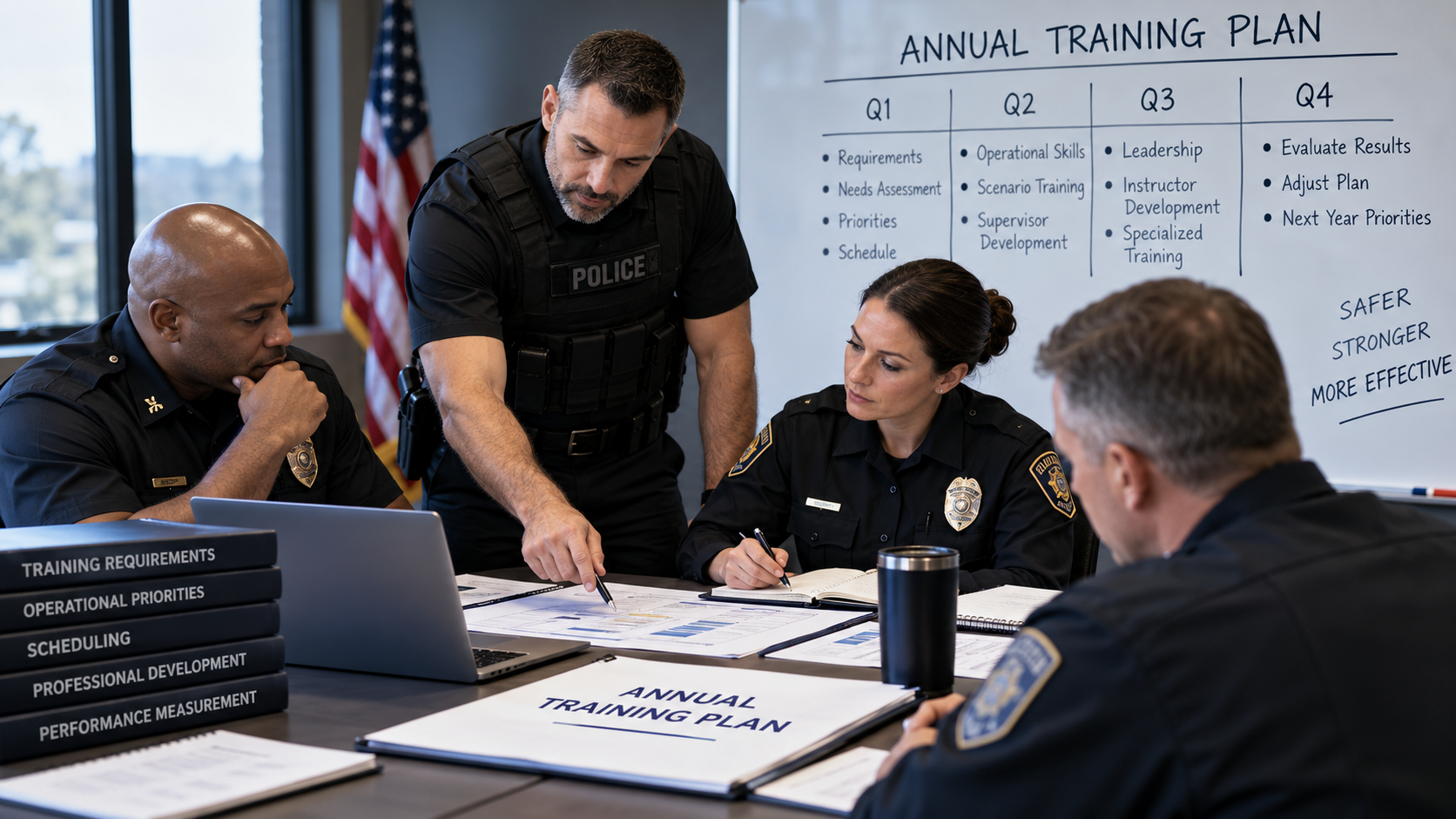
Example: A Quarterly Law Enforcement Training Plan
The following example illustrates how an agency might organize an annual training calendar. It is not a prescribed curriculum or a substitute for jurisdiction-specific requirements.
First Quarter: Establish Requirements and Identify Gaps
Confirm mandatory training, review prior-year outcomes, conduct the training needs assessment, and establish the year's priorities.
Agency leaders should also identify personnel who may need additional supervisory, instructor, or specialized development.
Expected result: A documented set of training priorities, assigned responsibilities, and a realistic annual schedule.
Second Quarter: Strengthen Priority Operational Skills
Deliver training aligned with the most significant needs identified during the assessment.
Depending on the agency, those priorities may include communication, decision-making, officer safety, or practical application of established procedures.
Supervisors should reinforce relevant skills after training rather than treating course completion as the end of the process.
Expected result: Personnel have opportunities to demonstrate and apply the skills identified as priorities.
Third Quarter: Develop Leaders and Instructors
Address documented development needs among supervisors, field training officers, and agency instructors.
This may include coaching, performance feedback, accountability, instructional effectiveness, and preparing personnel for expanded responsibilities.
For agencies seeking to strengthen internal training capability, Command Presence's Instructor Development Series is one option to explore.
Expected result: Supervisors and instructors are better prepared to reinforce performance expectations and support continued learning.
Fourth Quarter: Evaluate Results and Prepare for the Next Year
Review completed training, identify unresolved performance gaps, and gather feedback from supervisors and participants.
Determine which training priorities should continue, which approaches should change, and what new needs should inform the next annual plan.
Expected result: The following year's training decisions are informed by evidence rather than simply repeating the previous calendar.
Step 5: Match Training Methods to the Skills Being Developed
Selecting a training topic is only part of the decision. Agencies must also consider how personnel will learn and practice the required skills.
Some subjects can be introduced through classroom instruction. Others require discussion, demonstration, practical exercises, scenarios, or continued coaching.
For example, explaining a communication principle is different from evaluating whether an officer can apply it under pressure.
When selecting training, consider:
- What should participants be able to do afterward?
- Does the training provide opportunities to practice?
- Will participants receive meaningful feedback?
- Can supervisors reinforce the skills on duty?
- Is the format appropriate for the agency's experience levels and operational needs?
The strongest training approach is not necessarily the one that covers the most material. It is the one that helps personnel develop and demonstrate the capabilities the agency needs.
Agencies can review Command Presence's course offerings when matching identified development priorities with available training.
Step 6: Measure Training Effectiveness Beyond Attendance
Attendance records and completion certificates are important for documenting training. They do not, by themselves, establish whether training improved performance.
An effective annual law enforcement training plan should identify how the agency will assess results.
Start With Observable Outcomes
Before training begins, define what participants should be able to demonstrate.
For communication training, that might involve applying a structured communication approach during a realistic exercise.
For supervisory development, it might involve providing clear performance expectations and actionable coaching.
For instructor development, it might involve delivering instruction, assessing participant understanding, and providing constructive feedback.
The outcome should be specific enough that an instructor or supervisor can recognize successful performance.
Evaluate Learning and Application
Training evaluation can occur at several points.
During training: Did participants demonstrate the intended knowledge or skill?
After training: Are supervisors observing the expected behaviors in relevant situations?
Over time: Is the agency seeing improvement in the specific performance gap that prompted the training?
Depending on the topic, agencies may use practical assessments, instructor observations, supervisor feedback, follow-up coaching, and relevant operational indicators.
Avoid Confusing Correlation With Training Impact
Operational outcomes are influenced by many factors beyond training.
A change in complaints, incidents, or other agency metrics may be worth reviewing, but it should not automatically be attributed to one course.
Use multiple sources of evidence and consider other changes occurring within the agency.
The purpose of evaluation is to make better training decisions—not to manufacture a success metric.
Step 7: Review and Adjust the Training Plan Quarterly
Annual planning should not mean making every decision once a year.
A quarterly review allows training coordinators and agency leaders to determine whether the plan remains aligned with operational needs.
During each review, ask:
- Which training requirements have been completed, and what remains outstanding?
- Are scheduled courses being delivered as planned?
- Have staffing or budget changes affected the schedule?
- Are supervisors seeing the expected application of trained skills?
- Have new performance gaps emerged?
- Should any priorities be adjusted for the next quarter?
Document significant changes and the reasons behind them.
This creates a more accountable process and helps the next annual planning cycle begin with better information.
Common Mistakes That Weaken Annual Training Plans
Even a well-intentioned training plan can fall short when the planning process is disconnected from agency operations.
Building the Calendar Before Identifying the Need
Selecting courses first can lead to a full schedule that does not address the agency's most important challenges.
Start with requirements, performance gaps, and organizational priorities. Then select training.
Treating Compliance as the Only Measure of Success
Required training is essential, but completing required hours does not necessarily resolve communication, leadership, or operational performance concerns.
Track compliance and performance development as related but distinct responsibilities.
Overlooking Supervisors and Instructors
Supervisors and instructors influence how training is reinforced after the course ends.
If they lack the skills to coach, evaluate, and communicate expectations consistently, the agency may struggle to sustain improvements.
Scheduling More Training Than the Agency Can Support
An ambitious calendar is not useful if staffing limitations repeatedly prevent personnel from attending or participating fully.
A realistic plan is more valuable than an extensive one that cannot be implemented.
Failing to Revisit Training Outcomes
When agencies repeat the same courses without reviewing results, they lose opportunities to improve their training investments.
Evaluation should inform future priorities, not simply close out the training record.
How Command Presence Supports Agency Training Priorities
A strong annual training plan starts with a clear understanding of what an agency needs its personnel to do well.
Command Presence provides law enforcement and public safety training focused on practical skills, leadership development, instructor effectiveness, and performance in the field.
For agencies building an annual plan, the priority should be selecting training that supports identified needs—not filling available dates with courses.
That may mean strengthening supervisory capabilities, developing instructors, reinforcing communication and decision-making, or preparing personnel for additional responsibilities.
Agencies coordinating training for their personnel can also explore the option to host a Command Presence course.
Build a Training Plan That Leads to Better Performance
An annual law enforcement training plan should be more than a list of required courses and scheduled dates.
It should help agency leaders make informed decisions about where to invest training time, which capabilities to strengthen, and how to evaluate progress.
By reviewing requirements, identifying performance gaps, prioritizing development, building a realistic schedule, and measuring results, agencies can create a training plan that supports both immediate operational needs and long-term organizational effectiveness.
The goal is not simply to complete another year of training. It is to make the training year count.