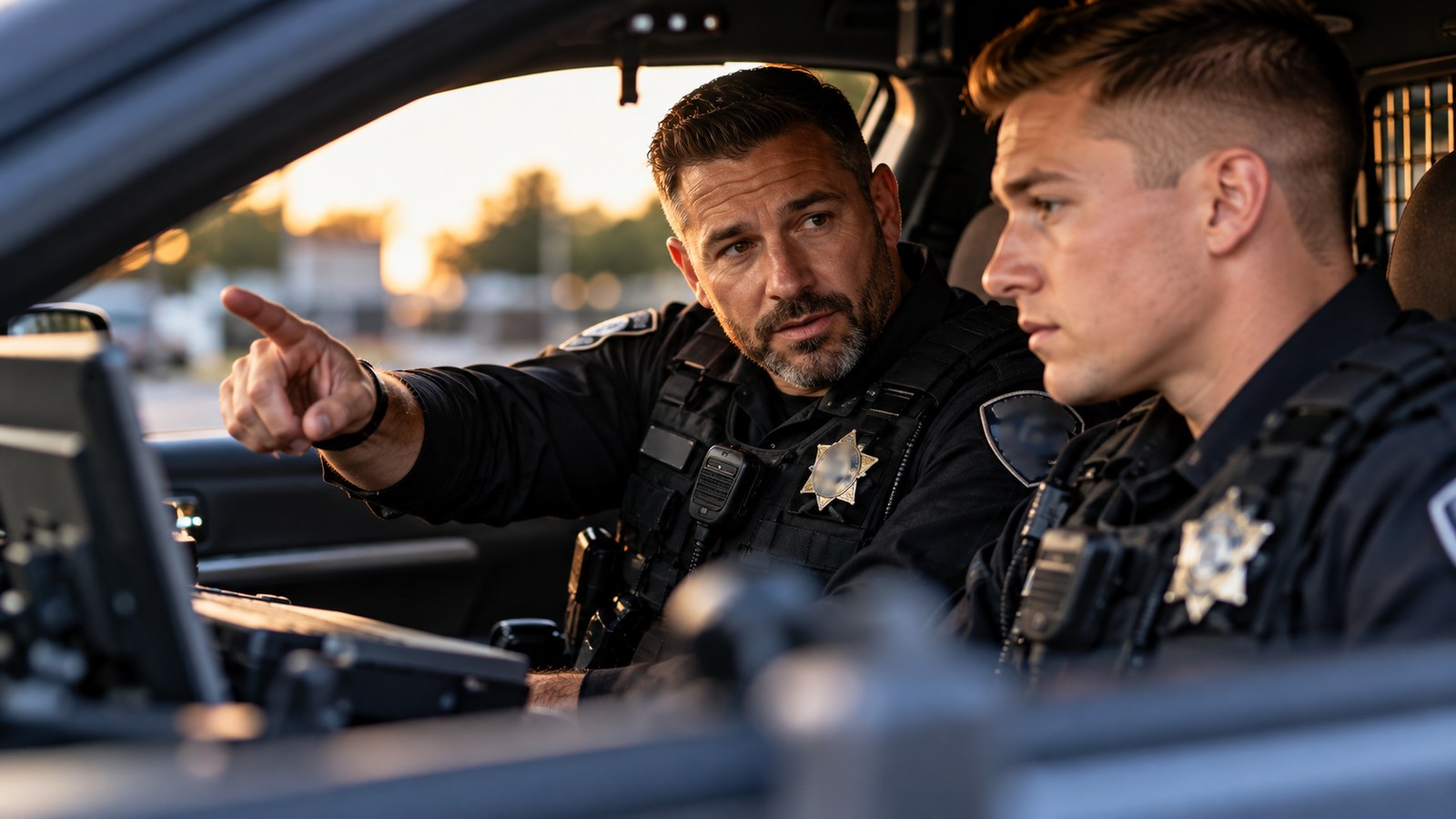
Being a good police officer does not automatically make someone a good field training officer.
Experience matters. So do sound judgment, communication skills, professionalism, and credibility. But an FTO has an additional responsibility: turning that experience into development for someone else.
A good field training officer models professional performance, teaches decision-making, communicates expectations clearly, provides useful feedback, evaluates objectively, and gradually gives the trainee more responsibility as competence develops.
The goal is not simply to help a trainee complete the field training program.
The goal is to develop an officer who can think, decide, communicate, and perform when the FTO is no longer beside them.
That requires more than knowing the job. It requires knowing how to develop another officer to do it.
A Good Officer Isn't Automatically a Good FTO
Experienced officers often make difficult parts of the job look routine.
They notice details quickly. They recognize patterns. They anticipate problems. They know which questions to ask and what information matters. Years of experience have shaped how they assess situations and make decisions.
A new officer does not have that experience yet.
That creates one of the most important responsibilities of a field training officer: making the invisible parts of good police work visible.
It is not enough to tell a trainee what to do. A good FTO can explain why.
What did you notice?
Why did that matter?
What options did you consider?
Why did you choose this response?
What would have caused you to make a different decision?
Those conversations help turn experience into something a trainee can understand and eventually apply independently.
Knowing how to perform a task and knowing how to teach it are different capabilities. That same distinction is explored in How to Become a Better Law Enforcement Instructor, where the focus is on turning professional experience into training other officers can understand, practice, and apply.
Experience gives an FTO something worth teaching. The ability to develop others determines whether that experience transfers.
Good FTOs Teach Officers How to Think
A field training officer can provide an answer quickly.
Sometimes that is necessary.
But if the FTO provides every answer, makes every decision, and solves every problem, the trainee can appear to perform well without developing the judgment needed to operate independently.
Strong FTOs teach the thinking behind the work.
That means helping trainees learn to:
- Identify what matters in a situation
- Separate relevant information from distractions
- Recognize when information is missing
- Consider reasonable options
- Anticipate potential consequences
- Make a decision based on the circumstances
- Explain the reasoning behind that decision
One of the simplest ways to develop those skills is to ask before telling.
What are you seeing?
What information do you still need?
What are your options?
What concerns you about this situation?
What would change your approach?
What are you going to do next?
Questions force the trainee to articulate a thought process. They also give the FTO a better view of how the trainee reached a decision.
That matters because two officers can take the same action for very different reasons.
An FTO needs to evaluate more than the outcome. The FTO needs to understand the decision-making that produced it.
If the FTO makes every decision, the trainee gets experience following an FTO—not experience making decisions as an officer.
FTOs Have to Model the Standard
New officers learn from what their FTO does as much as what their FTO says.
They watch how the FTO communicates with people.
They watch how the FTO handles frustration.
They watch how policy is applied, how reports are completed, how other officers are treated, and what happens when a mistake is made.
They also notice shortcuts.
An FTO cannot expect a trainee to consistently demonstrate a standard the FTO does not model.
That makes everyday behavior part of the training process.
An FTO models expectations through:
- Professional communication
- Sound decision-making
- Officer safety
- Preparation
- Accountability
- Report writing and documentation
- Treatment of coworkers and community members
- Response to feedback and mistakes
This does not require pretending to be perfect.
In fact, there is value in a trainee seeing an experienced officer recognize a mistake, own it, correct it, and move forward.
That models accountability in a way a lecture cannot.
Every shift with a trainee teaches something. The question is whether you're teaching it intentionally.
Good FTOs Know the Difference Between Coaching and Correcting
A trainee makes a mistake.
The easy response is to point out what went wrong.
The better response starts by understanding why it went wrong.
Was it a knowledge problem?
Did the trainee understand what to do but lack the skill to execute it?
Did they miss an important piece of information?
Did they recognize the problem but make a poor decision?
Was the expectation unclear?
Have they performed the same task successfully before?
Those are different performance problems. They should not automatically receive the same response.
Diagnose the Performance Gap First
Before correcting a trainee, determine what needs to improve.
A useful sequence is:
Behavior → Impact → Adjustment
Behavior: What did the trainee actually do?
Impact: Why did that behavior matter?
Adjustment: What should the trainee do differently the next time?
That keeps feedback tied to performance instead of personality.
“Be more confident” gives a trainee very little to work with.
“Give one clear instruction, allow the person time to respond, and avoid changing your direction before they have an opportunity to comply” gives the trainee something observable to practice.
Good feedback should make the next attempt better.
That is the difference between identifying a problem and developing performance.
Know When to Step In—and When to Let the Trainee Work
Field training requires judgment from the FTO, too.
Early in training, a new officer may need more explanation, demonstration, and direction. As competence develops, the FTO should gradually transfer more responsibility to the trainee.
The progression should move away from:
Explain → Demonstrate → Direct
and toward:
Observe → Question → Evaluate
The exact pace depends on the trainee, the task, agency expectations, and the circumstances.
Safety still comes first. An FTO should intervene when a situation requires it.
But intervention should not become automatic simply because the experienced officer can solve the problem faster.
Trainees need opportunities to work through situations, make decisions, communicate, and adjust.
There may even be moments when the trainee chooses a reasonable approach that is different from the one the FTO would have chosen.
Different does not automatically mean wrong.
The goal of field training is not to create a copy of the FTO. It is to develop an officer capable of performing to the agency's standard.
Evaluate Performance, Not Personality
Field training officers have significant influence over a trainee's development and evaluation.
That responsibility requires objectivity.
An FTO is not evaluating whether the trainee has the same personality, communication style, or approach they do. The question is whether the trainee's performance meets established expectations.
That means documenting what can actually be observed.
Consider the difference between:
“The trainee lacks command presence.”
and:
“The trainee gave multiple conflicting instructions, did not allow sufficient time for compliance, and required prompting before taking the next action.”
The second description gives a supervisor something useful.
It identifies behavior. It creates a basis for coaching. It gives the trainee a clearer understanding of what needs to improve.
It also allows performance to be evaluated over time.
Good Documentation Creates Clarity
Effective FTO documentation should help answer:
- What happened?
- What did the trainee do?
- What standard or expectation applied?
- What coaching was provided?
- What needs to improve?
- Has performance changed over time?
Avoid vague conclusions when specific observations are available.
Good documentation should allow another supervisor to understand the performance without having been there.
Objective evaluation protects the trainee, the FTO, and the integrity of the field training process.
Individual FTO performance also depends on clear expectations and consistency across the larger program. For the supervisor and agency perspective, see Modern FTO Program: A Supervisor's Guide.
Adapt the Coaching Without Moving the Standard
Not every trainee learns at the same pace or responds to the same coaching approach.
One trainee may understand something after a conversation.
Another may need to see it demonstrated.
Someone else may understand the concept but need repetition before performance becomes consistent under pressure.
Effective FTOs adjust.
That might mean:
- Demonstrating the task
- Asking the trainee to explain the decision
- Breaking a complex skill into smaller components
- Using a recent call as a coaching scenario
- Providing another opportunity to practice
- Changing how feedback is delivered
Adapting instruction does not mean lowering expectations.
The coaching can change. The performance standard doesn't.
That distinction allows an FTO to meet trainees where they are without losing sight of where they need to be.
Accountability Should Create Clarity, Not Dependence
Trainees need honest feedback.
Avoiding a difficult conversation because a trainee is struggling does not help that officer improve. Neither does turning every mistake into a confrontation.
A good FTO makes performance expectations clear enough that the trainee understands where they stand.
The trainee should be able to answer:
- What am I doing well?
- Where am I falling short?
- What does acceptable performance look like?
- What specifically needs to improve?
- Am I making progress?
Then the FTO has to provide opportunities for the trainee to apply that feedback.
That last step matters.
If the FTO continues stepping in before the trainee can demonstrate improvement, neither person learns whether the coaching worked.
Accountability should move the trainee toward greater ownership of performance.
As competence grows, so should responsibility.
Being an FTO Is a Leadership Role
An FTO may not hold supervisory rank.
That does not mean they are not leading.
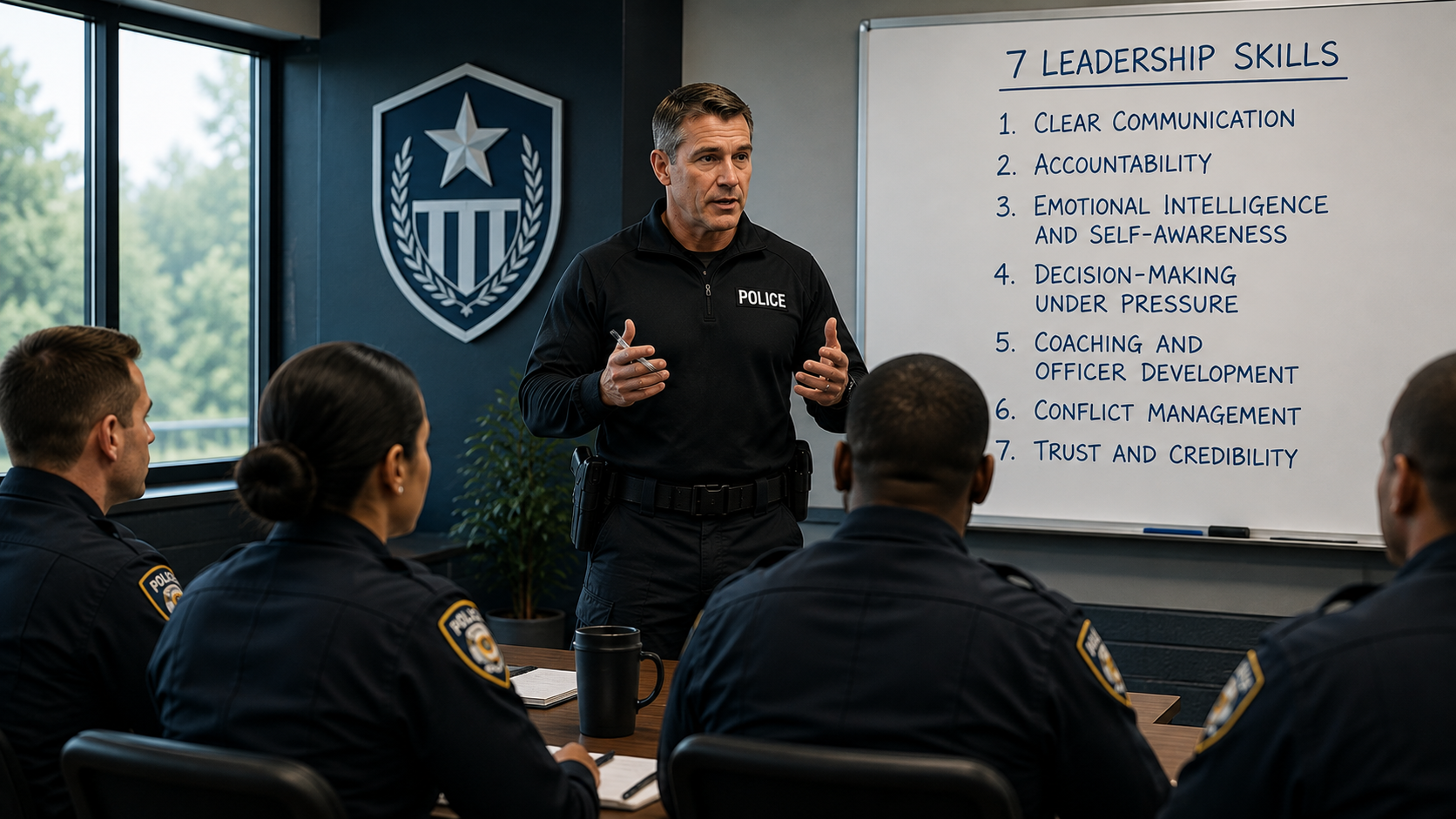
Field training officers influence how new officers understand professionalism, accountability, communication, decision-making, service, and agency culture.
For many new officers, an FTO is one of their earliest examples of what leadership inside the organization looks like.
That influence carries responsibility.
The strongest FTOs understand that the role is not about showing a trainee how much they know. It is about using what they know to make someone else better.
That requires patience without lowering standards.
Confidence without ego.
Accountability without humiliation.
Direction without creating dependence.
Rank gives someone authority. An FTO already has influence. What they do with that influence matters.
Field training can therefore be an important leadership-development opportunity for the FTO as well. Officers who learn how to coach, communicate expectations, address performance, and develop others are building skills that extend well beyond field training.
That principle is central to Leading Without Rank: officers do not need a supervisory title to begin developing the skills and influence required to lead others.
The Real Test Comes After Field Training
Eventually, the FTO will not be there.
There will be no experienced officer beside the trainee asking the next question.
The new officer will have to recognize what matters.
Assess the situation.
Communicate.
Make the decision.
Take action.
Explain why.
And own the result.
That is what field training should prepare an officer to do.
Completing the program matters. Required documentation matters. Meeting established performance standards matters.
But those are not the final objective.
Independent performance is.
A good FTO doesn't develop an officer who knows how to work beside them. A good FTO develops an officer who is prepared to perform without them.
Develop the People Who Develop Your Officers
Field training officers carry significant responsibility.
Agencies ask them to take new officers from initial training into the realities of the job. Along the way, FTOs must teach, coach, evaluate, document, communicate, model standards, and make decisions about when to intervene and when to step back.
Those capabilities should be developed intentionally.
Command Presence's The Leading Edge FTO focuses on developing field training officers for the instructional and leadership responsibilities that come with the role.
Strong field training depends on more than a good process.
It depends on capable FTOs who know how to turn experience into development—and prepare the next officer to perform when they're on their own.