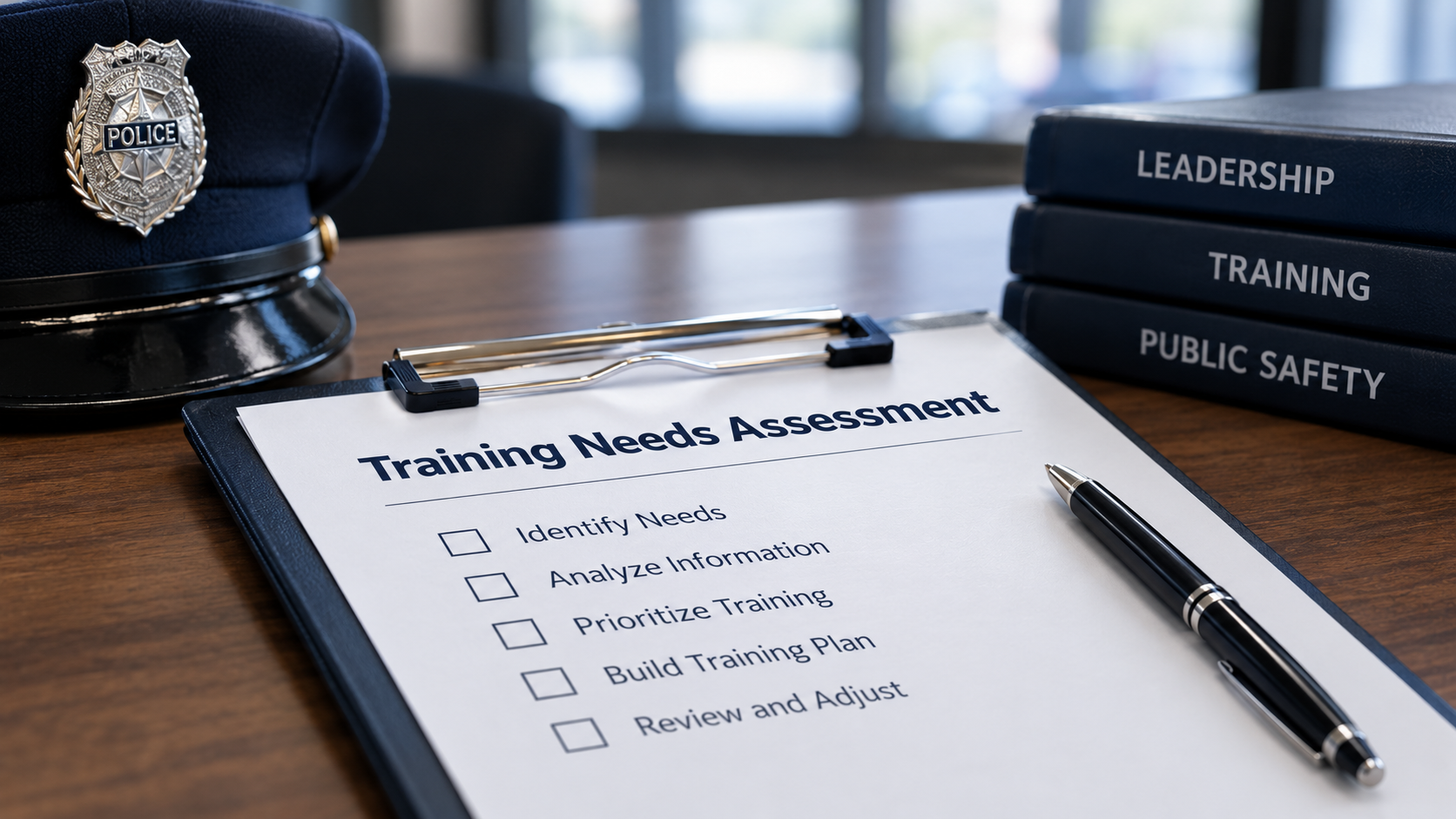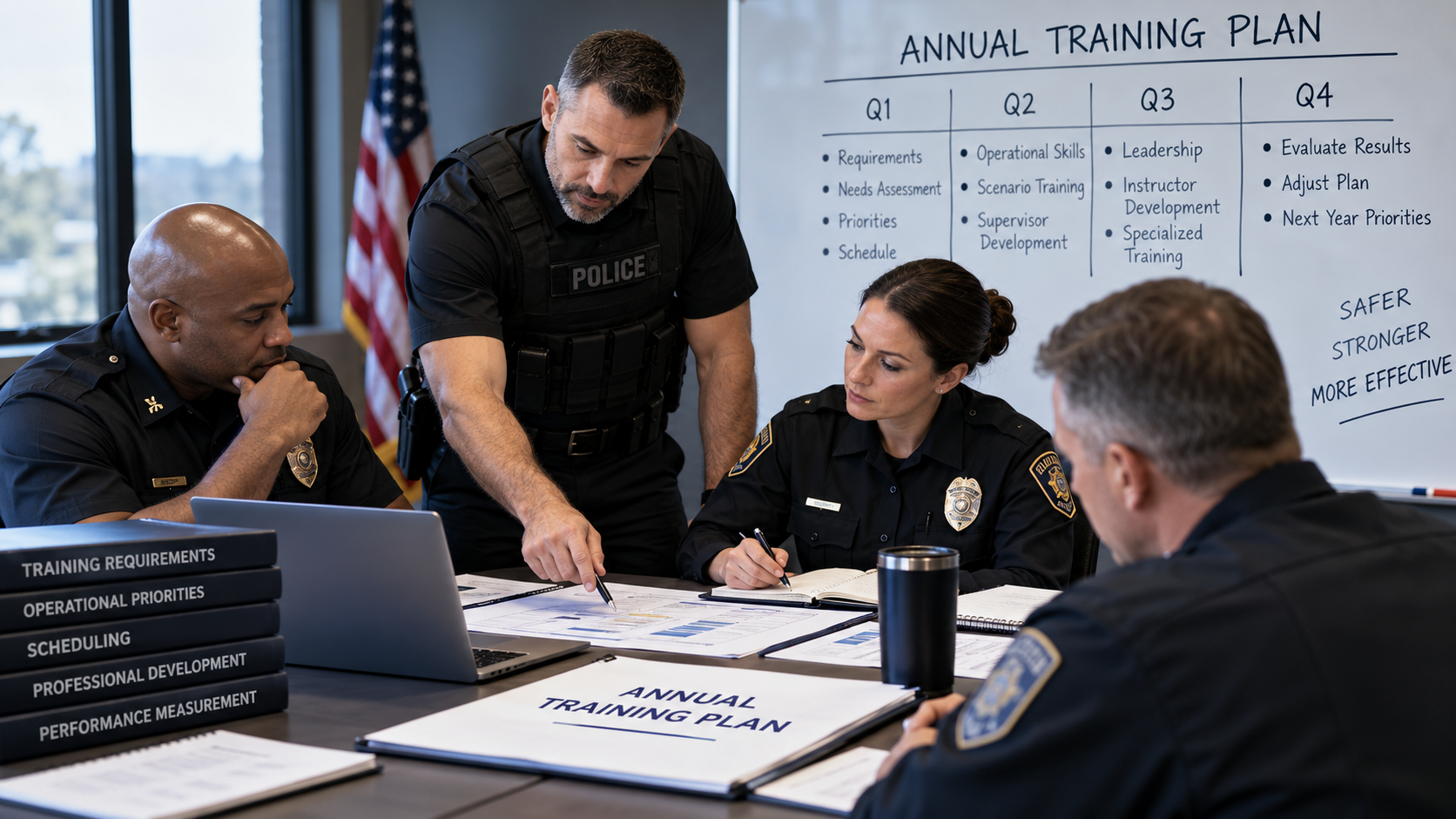
Law enforcement agencies invest significant time, staffing, and resources in training. But completing a course does not automatically mean an officer is better prepared to perform on duty.
Attendance records confirm participation. Certificates document completion. Course evaluations tell agencies what participants thought about the instruction.
None of those measures, on their own, establish whether training improved judgment, communication, leadership, or operational performance.
Measuring law enforcement training effectiveness means determining whether personnel learned the intended skills, can demonstrate those skills, and apply them consistently in their responsibilities.
For training coordinators, supervisors, and command staff, the goal is not simply to deliver more training. It is to develop capable professionals, reinforce agency expectations, and make better decisions about where training resources are needed.
That requires evaluating performance before, during, and after instruction.
What Is Law Enforcement Training Effectiveness?
Law enforcement training effectiveness is the extent to which instruction achieves its intended learning and performance objectives.
An effective evaluation process examines four levels:
- Completion: Did personnel attend and satisfy course requirements?
- Learning: Can they explain or demonstrate the knowledge and skills taught?
- Application: Do they use those skills appropriately in their assignments?
- Results: Is there evidence that the training contributed to improved performance or agency outcomes?
Each level provides important information, but they measure different things.
An officer may pass a written examination on communication and de-escalation techniques. That demonstrates knowledge. The next question is whether the officer can recognize when and how to use those techniques during a realistic encounter.
A supervisor may complete leadership training and understand the importance of accountability. The agency still needs to determine whether that supervisor communicates expectations clearly, provides effective coaching, and addresses performance concerns consistently.
Training effectiveness is not simply about what personnel know when they leave the classroom. It is about what they can do with that knowledge.
Why Training Completion Alone Does Not Measure Success
Training documentation is necessary. Agencies must track participation, maintain records, and meet applicable training requirements.
The mistake is treating those records as the final measure of success.
Consider an agency that sends its first-line supervisors to leadership training.
Every participant completes the course. Feedback is positive. The training coordinator documents the hours, and the agency moves on to the next priority.
Three months later, however, supervisors are still struggling with inconsistent expectations, difficult conversations, and employee accountability.
Was the training effective?
The agency cannot answer that question based on attendance alone.
It needs to know what the supervisors learned, whether they applied it, and what support they received after the course.
This is why agencies should define what successful performance looks like before selecting or delivering instruction.
The same principle applies when comparing online and instructor-led law enforcement training. The right training format depends on the outcome the agency needs—not simply how conveniently the course can be delivered.
How to Measure Law Enforcement Training Effectiveness: Five Practical Methods
A useful law enforcement training evaluation process does not depend on one test or one performance statistic.
It combines several methods that reflect the skills being developed.
1. Establish a Performance Baseline Before Training
Meaningful evaluation begins before the first lesson.
If an agency does not understand current performance, it becomes difficult to determine whether training produced improvement.
Start by identifying the specific knowledge, skills, or behaviors the instruction is intended to develop.
Then establish a baseline using an appropriate assessment.
Depending on the training topic, that may include:
- A knowledge assessment.
- A structured skills demonstration.
- A realistic scenario.
- Documented supervisor observations.
- Relevant performance records.
For example, an agency preparing officers for communication-focused training might evaluate how they recognize changing circumstances, deliver clear instructions, listen actively, and adjust their approach when necessary.
For leadership development, the baseline might focus on supervisory coaching, communication, accountability, and follow-through.
The important step is defining observable behaviors.
"Improve communication" is a worthwhile goal, but it is difficult to measure without greater specificity.
"Communicate expectations clearly and provide timely, actionable feedback" gives an agency something it can observe and evaluate.
The more clearly the desired performance is defined, the more useful the evaluation becomes.
2. Measure Learning Through Practical Assessments
Training should provide opportunities for personnel to demonstrate what they have learned.
Written assessments may be appropriate for policies, procedures, or foundational knowledge. But skills involving judgment, communication, leadership, and decision-making often require more practical evaluation.
Scenario-based exercises allow personnel to apply concepts in realistic situations.
A communication and decision-making scenario, for example, might assess whether an officer:
- Recognizes relevant information and changing conditions.
- Communicates clearly and professionally.
- Demonstrates sound judgment.
- Uses available options appropriately.
- Can explain the reasoning behind decisions.
Evaluators should use consistent criteria so that participants are assessed against the same expectations.
The purpose is not simply to assign a score. It is to identify strengths, recognize development needs, and provide feedback that improves the next performance.
A strong assessment should help the participant understand what went well, what needs attention, and how to improve.
3. Evaluate Behavior After Personnel Return to Duty
This is where training effectiveness becomes especially important.
An officer may demonstrate a skill during a controlled exercise but struggle to apply it during actual operations. A supervisor may understand a leadership principle without consistently practicing it.
The agency needs a way to determine whether the training transfers into daily performance.
Supervisors are essential to this process.
They can observe personnel over time, reinforce expectations, and identify whether newly developed skills are becoming part of normal operations.
Following communication training, supervisors might look for appropriate listening behaviors, clear instructions, and sound decision-making during relevant encounters.
Following leadership training, they might evaluate whether supervisors are:
- Setting clear expectations.
- Providing timely feedback.
- Coaching employees consistently.
- Addressing performance concerns professionally.
- Following through on decisions and commitments.
These observations should be based on defined behaviors rather than general impressions.
They should also account for context. Personnel may not have equal opportunities to demonstrate a particular skill during the evaluation period.
The goal is not to scrutinize every action. It is to reinforce the behaviors the agency expects and provide meaningful coaching when improvement is needed.
This approach is particularly relevant to field training programs. As explained in How to Build a Modern FTO Training Program, consistent evaluation, clear performance standards, and documented coaching are essential to developing officers who are ready to work independently.
Those same principles can strengthen training evaluation throughout an officer's career.
4. Track Performance Indicators That Match the Training Objectives
Agencies can also examine performance information to identify trends.
The key is selecting measures that relate directly to what the training was intended to accomplish.
Depending on the topic, useful indicators may include:
- Results from recurring skills assessments.
- Quality and consistency of reports or other work products.
- Documented supervisory coaching and improvement.
- Relevant incident review findings.
- Patterns in performance deficiencies.
- Observed changes in specific leadership or communication behaviors.
These indicators provide context, but they require careful interpretation.
For example, fewer complaints after communication training may be encouraging. That change alone does not prove the training caused the reduction.
Staffing, assignments, operational conditions, reporting practices, and other factors may also influence the results.
Likewise, an increase in documented coaching does not necessarily indicate declining performance. It may reflect supervisors becoming more consistent about identifying and addressing development needs.
Training effectiveness should be evaluated through multiple sources of evidence, not one number.
Agencies should also ask prospective training partners how they define and assess learning outcomes. Command Presence explores this consideration in How to Evaluate a Law Enforcement Training Vendor: A Practical Checklist for Agencies.
A training provider should be able to explain what participants are expected to learn and how those outcomes can be demonstrated.
5. Measure Skill Retention Over Time
An officer may demonstrate a skill immediately after training and still lose proficiency without reinforcement.
That makes follow-up evaluation essential.
Training coordinators and supervisors should determine whether personnel retain important concepts and continue applying the skills they learned.
Depending on the subject, this may involve brief refresher exercises, follow-up discussions, recurring skills checks, or structured supervisor observations.
Not every skill needs the same evaluation schedule.
Frequently used skills may provide regular opportunities for observation. Skills associated with uncommon but high-consequence situations may require deliberate practice because opportunities for real-world application are limited.
The objective is to identify when reinforcement is needed before a performance gap becomes more serious.
How to Measure Training Effectiveness After Officers Return to Duty
A structured follow-up process can help agencies evaluate whether training is influencing performance without creating an unnecessarily complicated system.
One practical approach is to review performance at approximately 30, 60, and 90 days after instruction.
These intervals are a suggested management framework, not a universal training standard. Agencies should adjust them based on the skill, assignment, operational needs, and available opportunities for observation.
At 30 Days: Reinforce Expectations
During the first month, supervisors should confirm that personnel understand what they are expected to apply.
A brief conversation or observation may be enough to identify early progress and barriers.
Supervisors should consider whether the employee understands the training objectives, has had opportunities to apply the material, and needs additional support.
This review reinforces that the training was intended to influence performance—not simply satisfy a requirement.
At 60 Days: Look for Consistent Application
The second review should focus on whether the intended behaviors are becoming more consistent.
Supervisors can compare observations against the original baseline and document examples of effective application.
Where appropriate, instructors or training coordinators can conduct a short skills check or refresher scenario.
If progress is limited, determine why.
The employee may need additional practice. Expectations may be unclear. The work environment may not provide sufficient opportunities to apply the skill.
In some cases, the issue may involve inconsistent supervision rather than ineffective instruction.
Understanding the cause helps the agency choose the right response.
At 90 Days: Review Progress and Decide What Comes Next
By the third review, the agency should have a clearer picture of what personnel learned, what they are applying, and where additional development may be needed.
Training coordinators and supervisors can review:
- Initial assessment results.
- Follow-up observations.
- Skills reassessments.
- Relevant performance indicators.
- Coaching or reinforcement already provided.
The objective is to determine what improved, what remains inconsistent, and what should happen next.
Some outcomes cannot be meaningfully assessed within 90 days. In those cases, the agency should extend the review period rather than force a conclusion.
The value of the framework is consistency and follow-through.
How to Know Whether Training Actually Caused Improvement
One of the challenges in evaluating police training effectiveness is separating the influence of training from other factors.
Suppose an agency completes leadership development training and later sees more consistent supervisory coaching.
That is useful evidence, particularly if the improvement aligns with the course objectives and appears in documented observations.
But other factors may have contributed.
The agency may also have introduced clearer expectations, changed its evaluation process, or increased command staff involvement.
A responsible evaluation should ask three questions.
What changed? Identify the observable difference in knowledge, behavior, or performance.
What evidence supports that change? Review assessments, supervisor observations, and other relevant information.
What else could explain the result? Consider operational conditions, changes in supervision, assignment differences, and other organizational influences.
The purpose is not to make evaluation unnecessarily complicated.
It is to avoid drawing conclusions that the available evidence cannot support.
Agencies make better decisions when they understand both what their evaluation shows and what it does not.
Why Supervisors and Agency Leadership Determine Whether Training Sticks
Training does not operate separately from agency culture.
Personnel return from a course to an environment shaped by supervisors, expectations, habits, and daily operational demands.
If the agency does not reinforce what was taught, even well-designed instruction may have limited impact.
Supervisors help bridge that gap.
They establish expectations, recognize effective behavior, provide coaching, and create opportunities for personnel to apply new skills.
Command staff also have a responsibility to ensure that training priorities align with organizational expectations.
When leaders communicate one standard during training but reinforce another in daily operations, personnel receive conflicting messages.
That inconsistency can undermine development.
As discussed in Law Enforcement Preparedness Training Starts With Leadership — Not the Crisis, preparedness depends on the communication, decision-making, and leadership habits agencies build before critical moments occur.
Those habits are strengthened through repetition, feedback, and consistent expectations.
Training becomes more effective when instructors, supervisors, and command staff are working toward the same outcomes.
Use Training Evaluation Results to Make Better Agency Decisions
The purpose of evaluating training is not to produce another report.
It is to make better decisions.
If personnel consistently demonstrate a required skill, the agency may choose to maintain proficiency through periodic reinforcement.
If performance gaps remain, training leaders should determine whether the problem involves knowledge, practice, coaching, supervision, or another organizational factor.
Not every performance issue requires another class.
Sometimes the appropriate response is clearer expectations, better feedback, more consistent leadership, or additional opportunities to practice.
Training evaluation also helps agencies prioritize future professional development.
Instead of selecting courses primarily because they are available, agencies can use documented performance needs to guide training decisions.
That approach supports a more intentional training program—one that connects instruction to the agency's responsibilities, personnel development, and operational priorities.
For a broader framework, see Law Enforcement Training Programs: A Complete Guide for Agencies.
Effective Training Is About Performance, Not Participation
At Command Presence, training is about developing people who can think clearly, communicate effectively, lead with confidence, and serve with professionalism.
That development requires more than delivering information.
It requires practical application, meaningful feedback, personal accountability, and leadership that reinforces what personnel have learned.
Agencies should expect their training investments to contribute to stronger performance. They should also recognize that improvement is a shared responsibility among instructors, personnel, supervisors, and command staff.
A completed course is one step in the process.
What happens afterward determines whether the learning becomes part of how people perform.
The Takeaway: Measure What Matters
The most useful measure of law enforcement training effectiveness is not how many people attended a course.
It is whether personnel learned the intended skills, can demonstrate them, and apply them appropriately over time.
Agencies can build a stronger evaluation process by establishing a baseline, assessing practical performance, observing behavior after training, reinforcing important skills, and reviewing the results.
They do not need to measure everything.
They need to define what matters, evaluate it consistently, and use what they learn to make better decisions.
That is how training becomes more than an event on the calendar. It becomes part of an agency's ongoing commitment to professional development, operational readiness, and service.
Explore Command Presence's law enforcement and public safety training courses to identify development opportunities aligned with your agency's priorities.