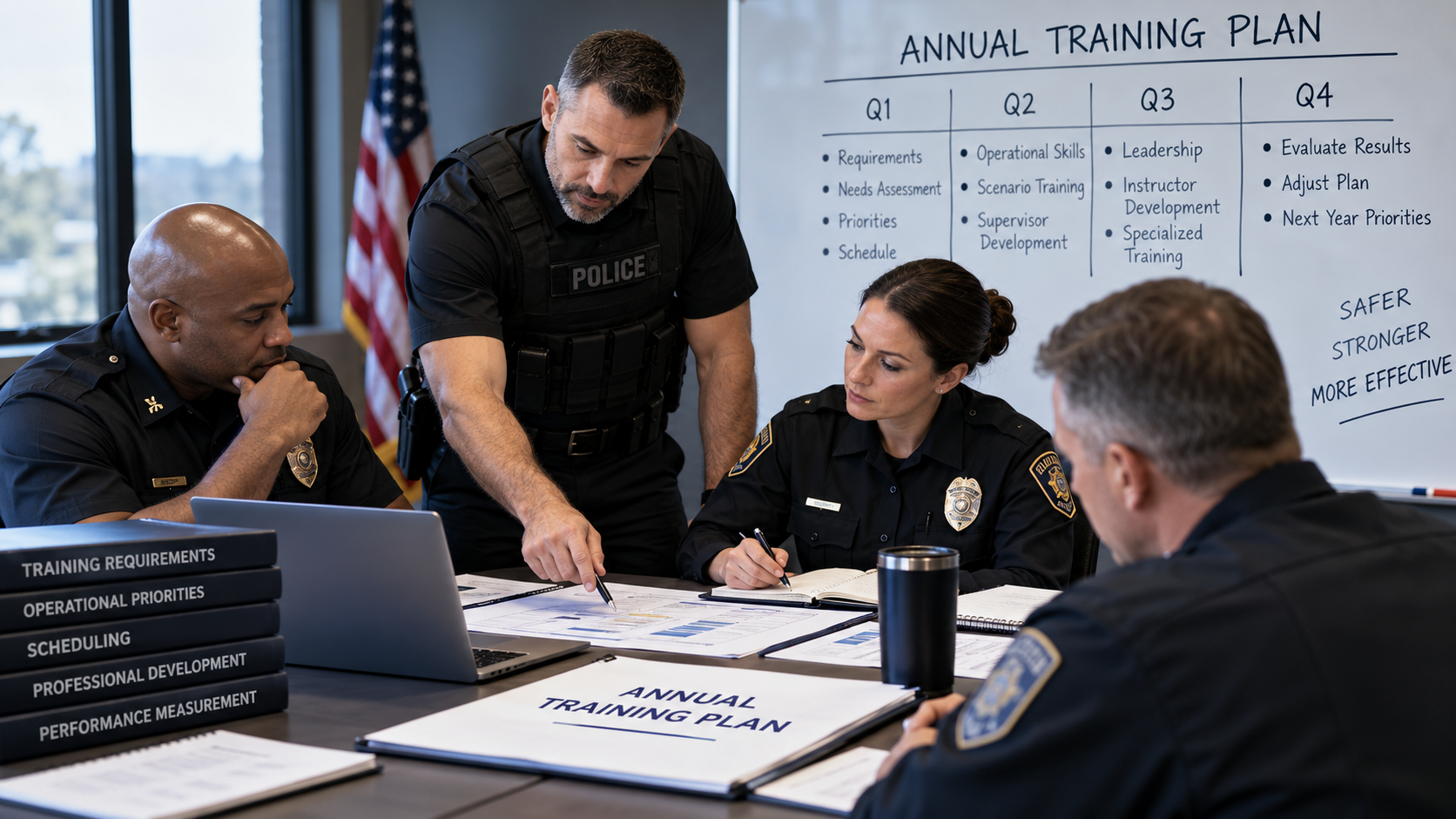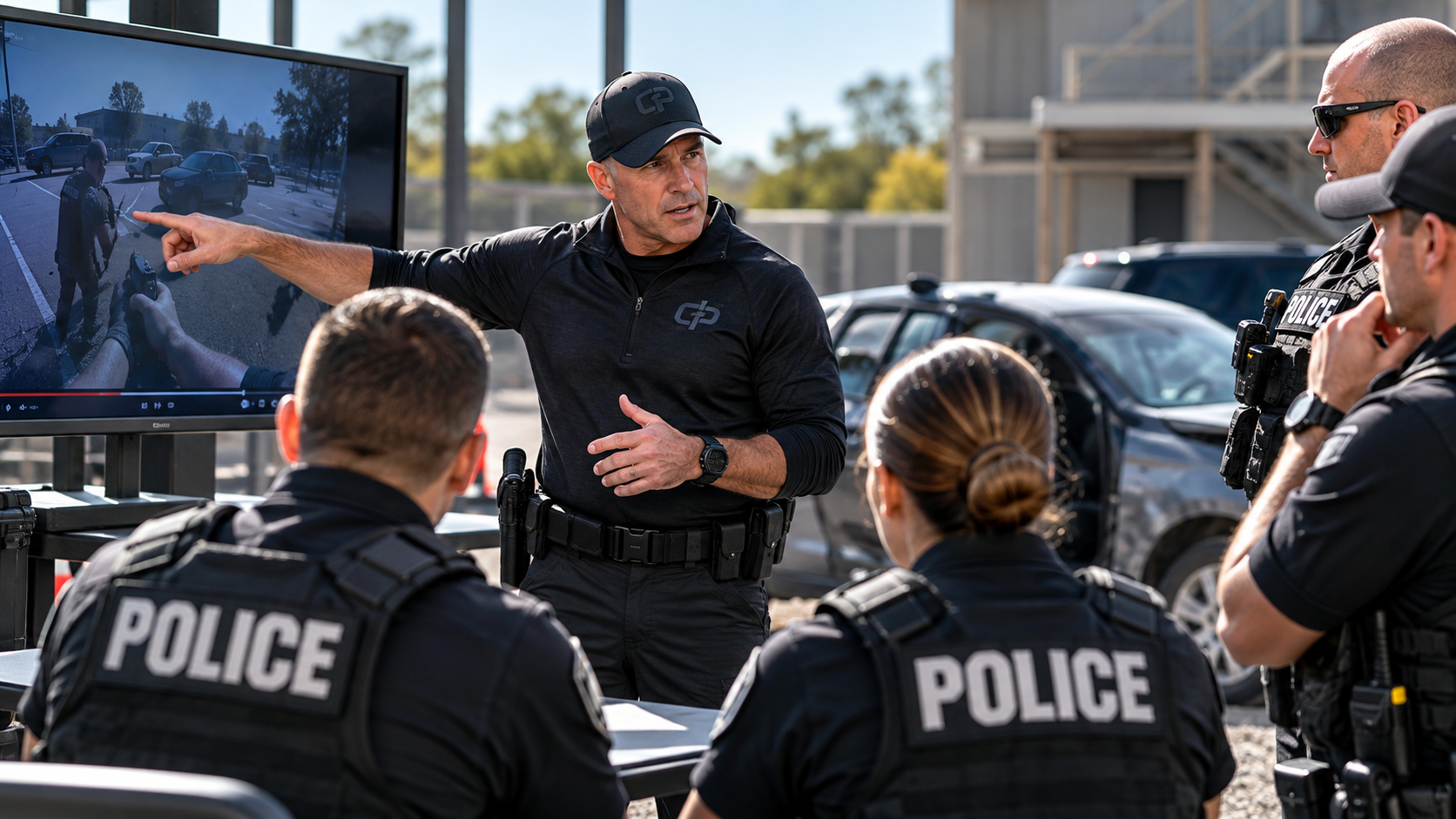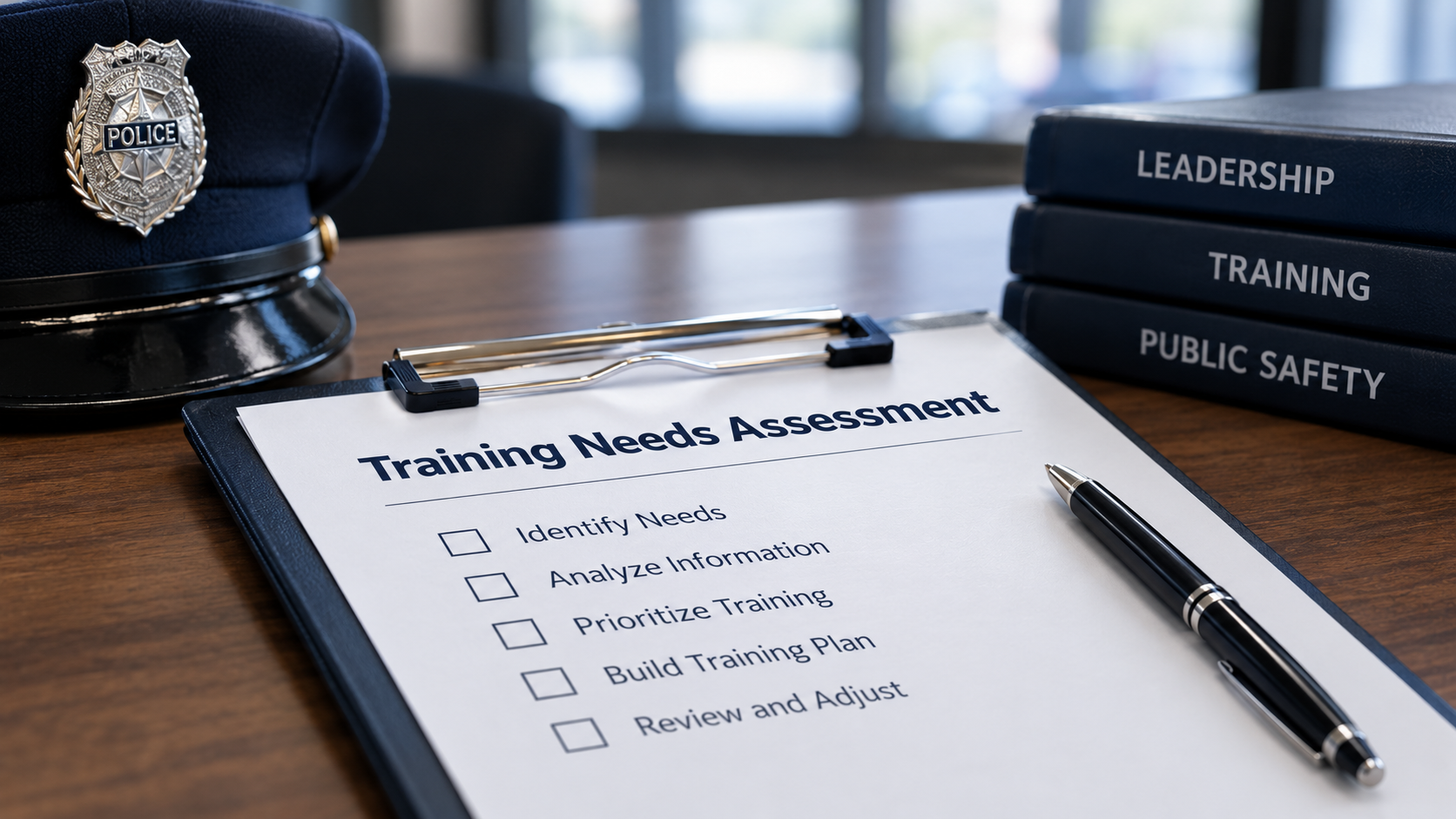
Law enforcement agencies invest significant time and resources in training. Before scheduling the next course, agency leaders should ask a fundamental question: Does our training address what our personnel need to perform effectively?
Required certifications and established training schedules are important, but they do not always reveal gaps in officer knowledge, practical skills, or supervisory development.
A law enforcement training needs assessment helps agencies identify those gaps, understand their causes, and establish training priorities based on operational needs.
The process should lead to informed decisions—not simply a longer list of courses.
What Is a Law Enforcement Training Needs Assessment?
A law enforcement training needs assessment is a structured process for identifying differences between current personnel capabilities and the knowledge, skills, and abilities required for effective performance.
It helps agency leaders determine where training is needed, who needs it, and which priorities require attention.
An effective assessment considers three levels:
- Agency needs: What capabilities does the department need to support its mission, operational priorities, and service responsibilities?
- Assignment needs: What skills are required for patrol, investigations, field training, supervision, and specialized assignments?
- Individual needs: Where do specific officers or groups need additional knowledge, instruction, or practice?
These levels help leaders distinguish department-wide concerns from the needs of particular assignments or personnel.
For example, communication may be an agency-wide priority, but the development needs of patrol officers will differ from those of newly promoted supervisors.
Why Agencies Should Assess Training Needs Before Scheduling Courses
Training calendars are often influenced by certification requirements, instructor availability, budgets, and established schedules.
Those factors are necessary considerations, but they should not be the only basis for training decisions.
A needs assessment helps agencies:
- Identify gaps in officer knowledge and practical skills.
- Recognize supervisory and leadership development needs.
- Address changes in policy, legal requirements, and operational responsibilities.
- Allocate training resources according to documented priorities.
- Build an annual training plan that reflects agency needs.
It also creates an opportunity to consider information from personnel who work directly with the challenges being assessed.
Supervisors, field training officers, instructors, and command staff bring different perspectives. Examining those perspectives alongside operational records helps establish a more complete understanding of training needs.
How to Conduct a Law Enforcement Training Needs Assessment: 6 Steps
A useful assessment follows a clear process. Agencies can adapt these six steps to their size, resources, and organizational structure.
Step 1: Establish Performance Expectations
Begin by identifying what personnel are expected to know and do.
Review agency priorities, applicable policies, required competencies, and the responsibilities associated with each assignment.
Consider:
- Which skills are essential to safe and effective performance?
- Have policies, legal requirements, or operational responsibilities changed?
- What capabilities are needed for current and future assignments?
- Where have supervisors identified recurring performance concerns?
Clear expectations provide a basis for determining whether a training gap exists.
Step 2: Gather Information From Multiple Sources
A training needs assessment should not rely on a single survey or evaluation.
Collect relevant information from operational records, officers, supervisors, instructors, and command staff.
Look for patterns across sources. A concern raised during officer feedback may warrant closer examination if similar observations appear in incident reviews or practical training exercises.
The purpose is to establish what needs attention, not to assume the cause before reviewing the evidence.
Step 3: Identify Performance Gaps
Compare current performance with established expectations.
Determine where personnel may lack the knowledge, skills, or practical proficiency required for their assignments.
Distinguish between completing training and demonstrating a skill. An officer may have attended required instruction but still benefit from additional practice with a specific task.
The assessment should identify the capability that needs attention rather than simply recommending a course title.
Step 4: Determine the Cause
Before selecting training, determine why the gap exists.
Consider whether the issue involves:
- Limited knowledge or understanding.
- Insufficient opportunities to practice.
- Unclear policies or expectations.
- Inconsistent supervisory direction.
- Equipment, staffing, or operational constraints.
This step helps prevent agencies from assigning training to problems that require a different response.
Step 5: Prioritize Identified Needs
Evaluate each finding according to its potential impact and urgency.
Officer and public safety, legal requirements, frequency, performance consequences, and available resources should inform the decision.
Document which needs require immediate attention and which can be addressed through scheduled development.
Step 6: Document Findings and Assign Responsibility
Record the identified need, supporting information, recommended action, responsible personnel, and expected outcome.
This documentation provides a foundation for training plans, resource allocation, and future reviews.
It also helps command staff and training coordinators communicate why particular training priorities were selected.
Where to Look for Training Gaps
Training records show what instruction personnel have received. They do not provide a complete picture of how officers perform their responsibilities.
Agencies should review multiple sources to identify potential gaps.
Incident and use-of-force reviews may reveal recurring concerns involving tactics, communication, decision-making, or policy application.
Officer and supervisor feedback can identify challenges encountered during daily assignments.
Instructor and field training observations can highlight skills that require additional instruction or practice. Agencies developing their instructional capabilities can explore Command Presence's Instructor Development Series.
Injury and officer safety information may identify situations that warrant further examination.
Community feedback can provide additional context about interactions, communication, and service expectations.
Policy updates and legal developments may establish new training requirements or change existing performance expectations.
No single source should determine the outcome. Leaders should consider the available information together before reaching a conclusion.
From Assessment Findings to Training Decisions
Consider an agency reviewing its annual training needs. Incident reports, supervisor observations, and officer feedback identify an opportunity for additional practice with subject-control skills.
Before scheduling training, agency leaders examine the information to determine whether the concern involves knowledge, practical proficiency, policy clarity, or another factor.
If additional skills practice is appropriate, the training unit can develop focused, scenario-based instruction with clear performance expectations.
This process connects documented needs to specific training decisions without assuming that every performance concern requires another course.
When Training Isn't the Answer
Not every performance problem is a training problem.
An officer may understand a procedure but receive conflicting supervisory direction. A policy may be unclear. Equipment limitations or operational processes may prevent personnel from meeting expectations.
Additional instruction alone will not necessarily resolve those conditions.
Before recommending training, agency leaders should determine whether personnel:
- Understand what is expected.
- Have received appropriate instruction.
- Can demonstrate the required knowledge or skill.
- Have the equipment, guidance, and operational support needed to perform.
When a knowledge or skill gap is confirmed, training may be the appropriate response.
When the issue involves policy, supervision, equipment, or processes, leaders should address the underlying condition.
A needs assessment should help the agency select the right response—not automatically prescribe training.
How to Prioritize Training Needs
A needs assessment may identify more priorities than an agency can address at once.
Leaders should use consistent criteria to determine where resources will have the greatest operational value.
Five considerations can guide that process:
- Officer and public safety: What are the potential consequences if the gap remains unaddressed?
- Legal and policy requirements: Does the need involve mandatory instruction or changing standards?
- Frequency: How often does the concern occur?
- Performance consequences: How significantly does the gap affect assigned responsibilities?
- Resources: What instructors, equipment, facilities, and scheduling capacity are available?
A concern does not need to occur frequently to deserve priority. Some skills involve serious consequences even when they are used infrequently.
Agencies should also account for professional development needs that support future responsibilities.
For example, an assessment may identify a need to strengthen supervisory communication, accountability, or decision-making. Those findings can inform participation in a structured law enforcement leadership training program.
Prioritization should reflect both immediate operational requirements and the agency's longer-term personnel development needs.
Turning Assessment Findings Into an Actionable Training Plan
A completed assessment should provide clear direction for the agency's training calendar.
Each training priority should be connected to a defined need and an expected outcome.
Planning ElementQuestion to AnswerIdentified needWhat knowledge or skill requires attention?Expected outcomeWhat should personnel be able to demonstrate?Training responseWhat instruction or practice is appropriate?ResponsibilityWho will coordinate and deliver the training?Review methodHow will the agency confirm the expected capability?
This approach helps training coordinators move from general topics to purposeful instruction.
When selecting courses, agencies should consider whether the content, instructional methods, and intended audience align with the documented need. Command Presence's law enforcement training courses provide options for agencies reviewing their professional development priorities.
The training plan should also remain adaptable.
Changes in assignments, legal requirements, incident trends, and agency priorities may create new needs throughout the year.
Periodic review allows leaders to adjust the plan without waiting for the next annual assessment.
Building Training Around What Officers Need
A law enforcement training needs assessment gives agency leaders a practical basis for deciding where training resources should go.
It begins with established performance expectations, draws on relevant information, and distinguishes skill gaps from problems that require other solutions.
The findings should guide training priorities, course selection, and personnel development decisions.
For command staff, training coordinators, and supervisors, the responsibility is to ensure training addresses the knowledge and skills personnel need to carry out their assignments.
Command Presence supports that work through law enforcement and public safety training focused on leadership, communication, decision-making, and practical performance.
Effective training begins with a clear understanding of what personnel need to know and be able to do.