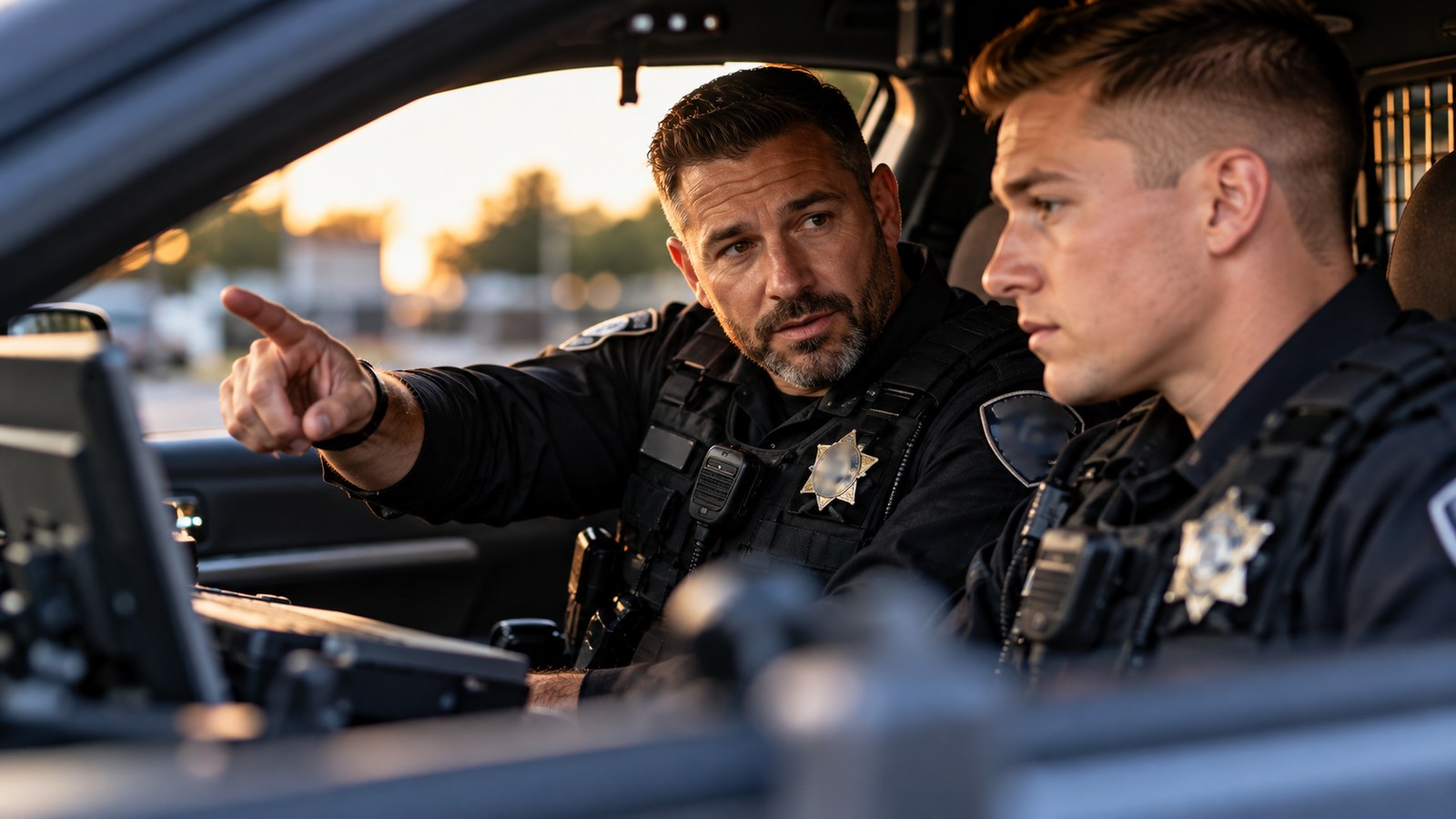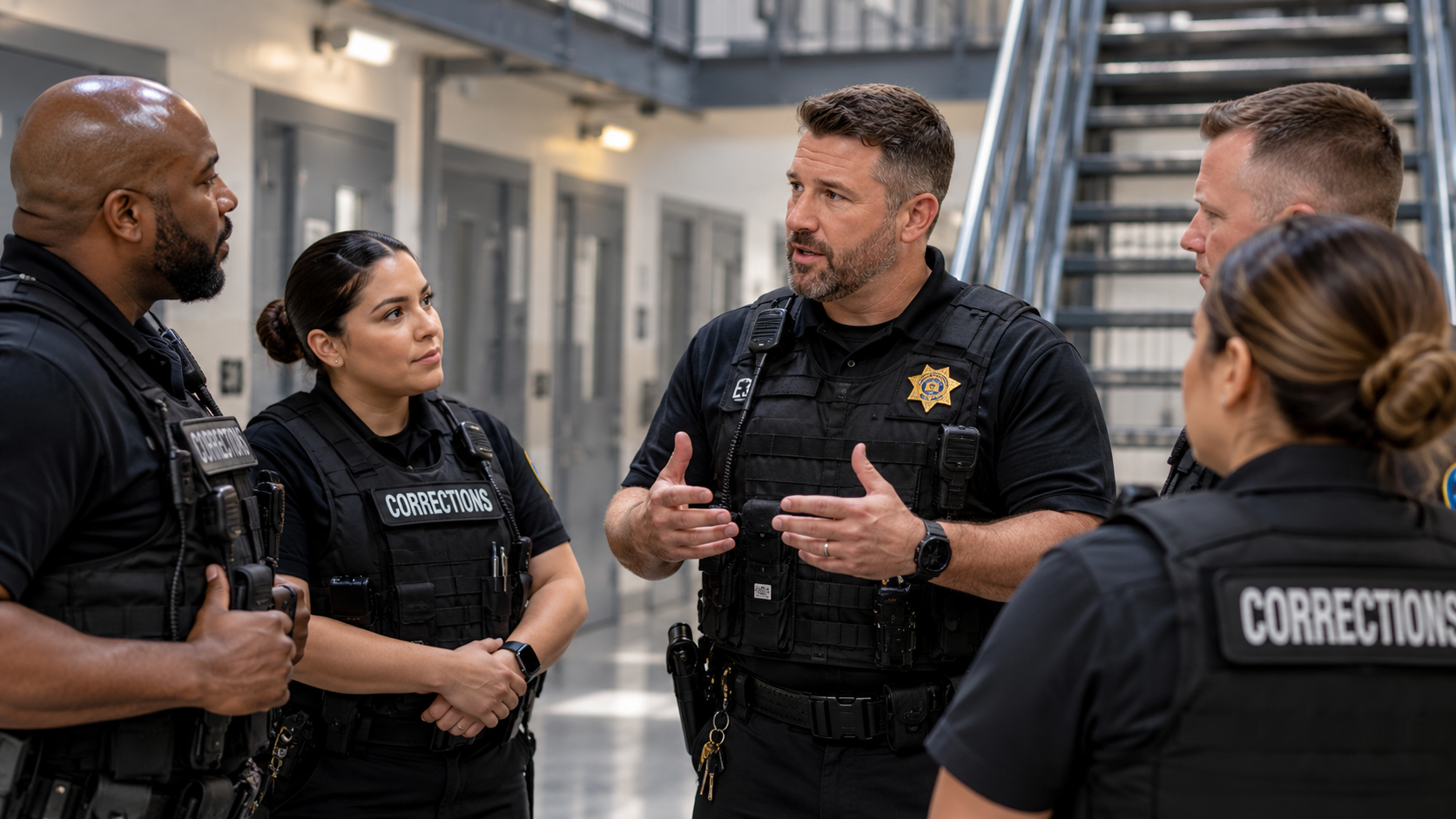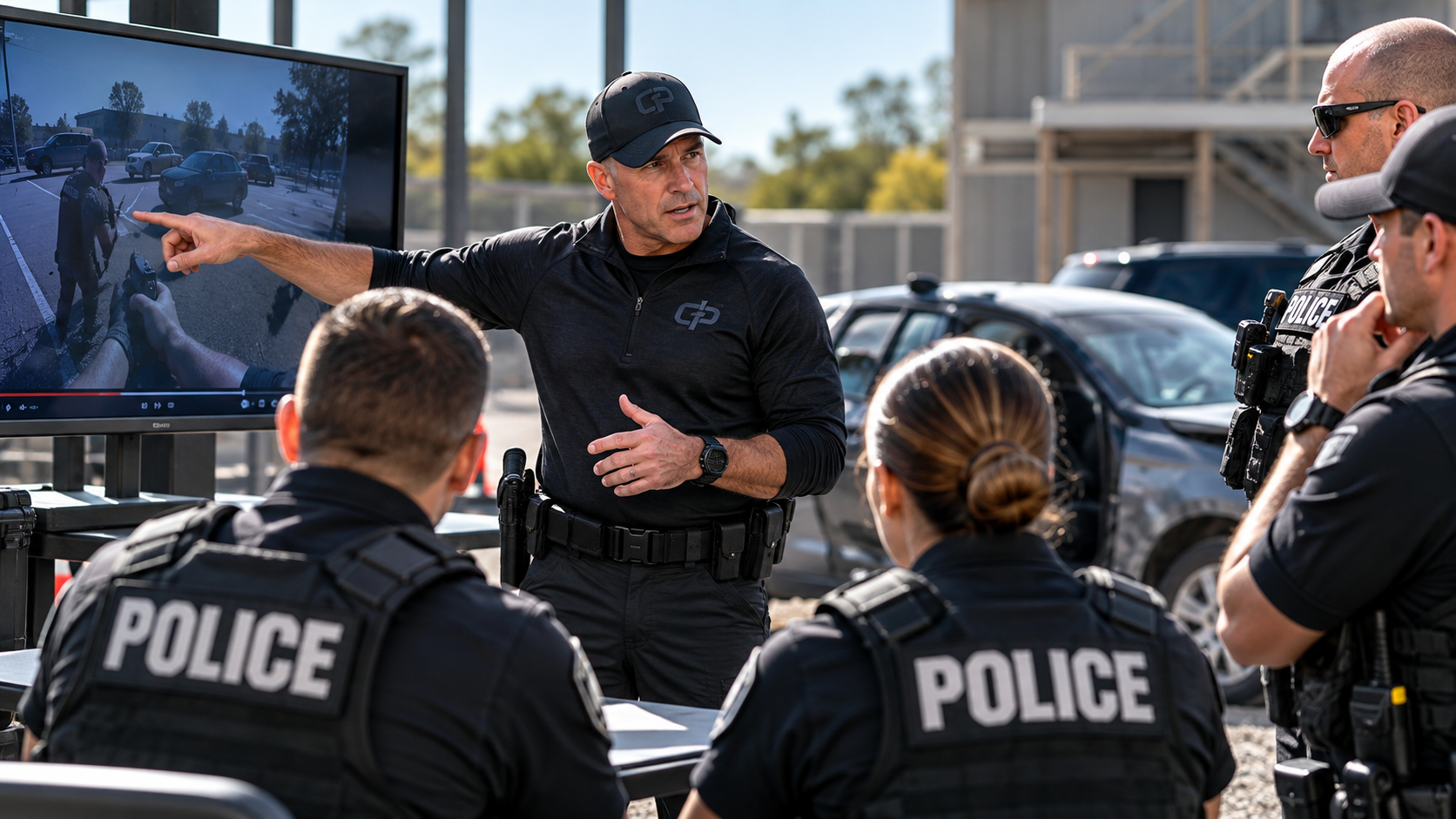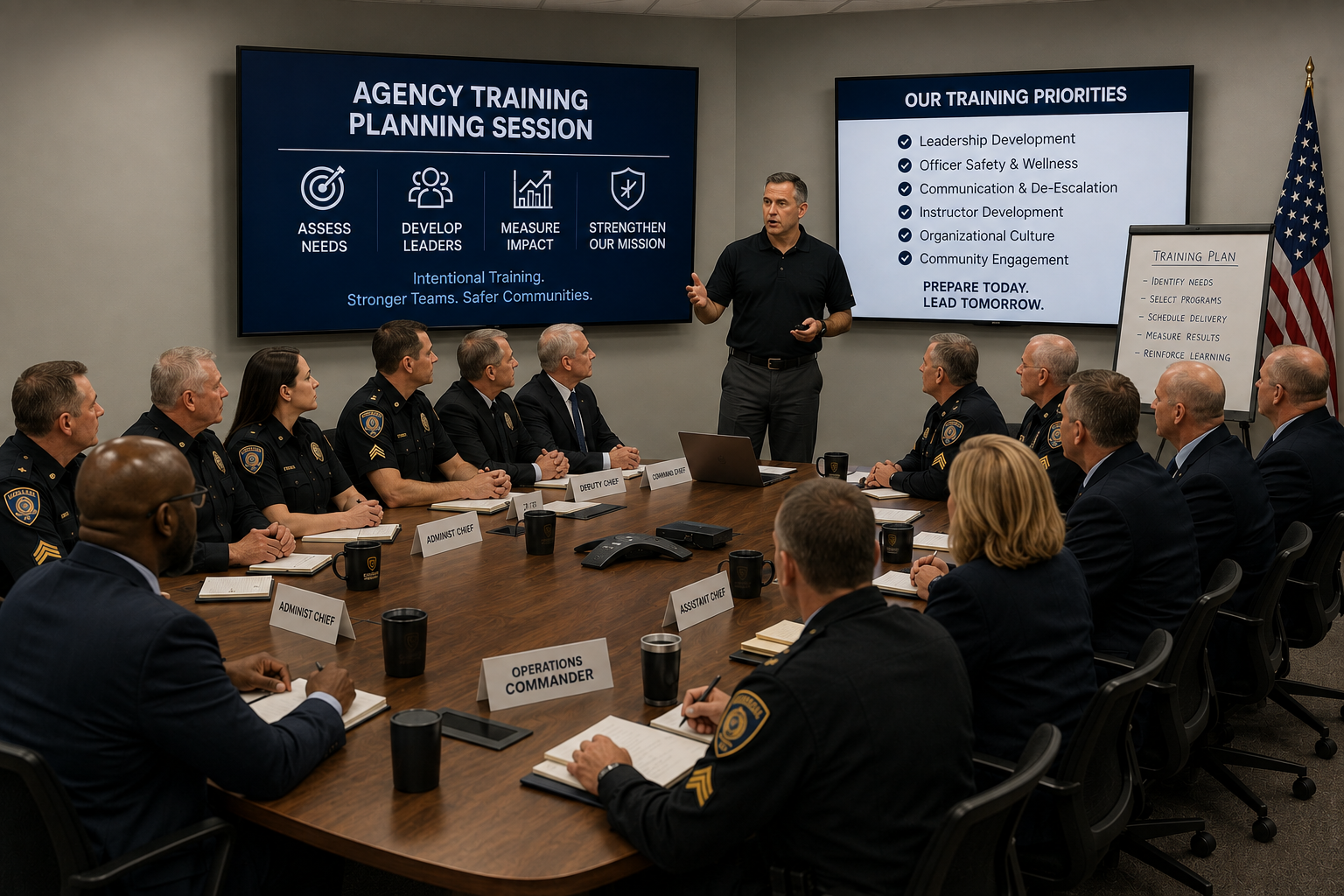
Promotion gives a police supervisor authority. Leadership determines what they do with it.
Moving from officer to supervisor changes the job. A supervisor is no longer responsible only for personal performance. They are responsible for setting expectations, making decisions, addressing problems, developing officers, communicating across the organization, and helping shape the culture of their team.
Technical competence still matters. But being a strong officer does not automatically make someone an effective leader.
Police leadership training develops the communication, decision-making, accountability, coaching, conflict-management, and people-development skills supervisors need to lead effectively. It prepares supervisors to influence performance, build trust, develop officers, and turn agency expectations into consistent behavior.
The best supervisors understand that leadership is not simply about managing a shift. It is about developing people.
Why Police Leadership Training Matters
First-line supervisors occupy one of the most influential positions in a law enforcement agency.
Command staff can establish the mission, expectations, and organizational values. Supervisors help determine how those expectations show up in daily work.
Officers experience leadership through briefings, calls, coaching conversations, corrections, critical incidents, and everyday interactions. What a supervisor reinforces—or ignores—can influence how a team communicates, solves problems, handles accountability, and serves the community.
That is why promoting a technically capable officer without preparing them to lead can create challenges for both the supervisor and the agency.
A new supervisor may suddenly be expected to manage conflict, address poor performance, lead former peers, make difficult decisions, and communicate organizational priorities without having been taught how to do those things as a leader.
Effective police leadership training helps close that gap. It gives supervisors practical tools for leading people, not just managing tasks.
7 Essential Police Leadership Skills Every Supervisor Needs
Effective supervisors rely on several interconnected skills. Communication affects accountability. Self-awareness influences conflict management. Coaching builds trust. Decision-making affects credibility.
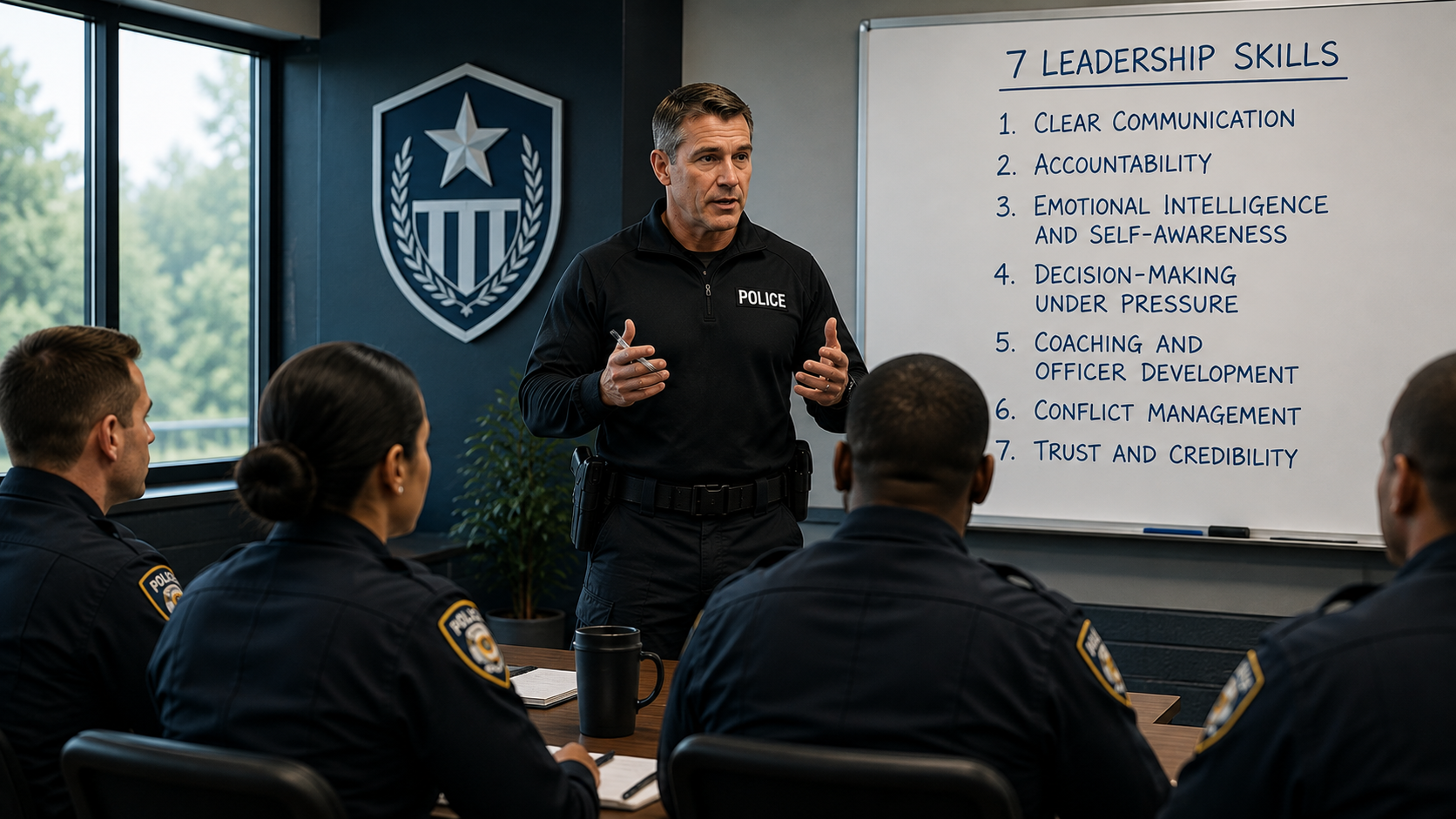
Seven of the most important police leadership skills are:
- Clear communication
- Accountability
- Emotional intelligence and self-awareness
- Decision-making under pressure
- Coaching and officer development
- Conflict management
- Trust and credibility
1. Clear Communication
Supervisors communicate constantly.
They communicate expectations during briefings, priorities when assigning work, standards when correcting performance, and organizational decisions to officers who may not agree with them.
Effective communication is more than giving clear instructions. It requires listening, asking good questions, providing context when appropriate, and recognizing when a message has not been understood.
Officers should know what is expected, why it matters, and what successful performance looks like.
Supervisors also need to listen. Officers are often closer to operational problems than the people making organizational decisions. Leaders who create room for questions and honest feedback are better positioned to understand what is happening within their teams.
Clear communication reduces uncertainty and helps create consistency between what leaders say and what officers experience.
2. Accountability
Accountability is one of the most important—and most misunderstood—responsibilities of a police supervisor.
It is not simply discipline. Accountability begins with clear expectations.
Officers need to understand the standards they are expected to meet. Supervisors then need to reinforce those standards consistently, recognize strong performance, and address problems before they become accepted behavior.
Not every performance issue requires the same response. Some problems are best addressed through coaching. Others require clearer direction, additional training, documentation, or corrective action. Effective supervisors learn to distinguish between them.
Avoiding accountability does not protect morale over the long term. When strong performers repeatedly watch poor performance go unaddressed, frustration can grow.
The goal is not to choose between accountability and morale. Strong leadership creates an environment where people understand the standards, know where they stand, and trust that expectations will be applied fairly.
3. Emotional Intelligence and Self-Awareness
Police leadership often happens under pressure.
A supervisor may move from an administrative task to a personnel problem to a critical incident within a short period. Each situation can create frustration, stress, urgency, or uncertainty.
Self-awareness helps leaders recognize how those pressures affect their behavior.
Emotional intelligence does not mean avoiding difficult conversations or lowering standards. It means understanding yourself and the people around you well enough to communicate and lead effectively.
For supervisors, that includes recognizing when frustration is affecting their tone, understanding how an officer may receive feedback, remaining composed during conflict, and adapting communication to the situation.
A leader's behavior sends a message, especially when circumstances become difficult.
4. Decision-Making Under Pressure
Law enforcement supervisors rarely have perfect information.
They may need to make decisions quickly while balancing operational priorities, policy, risk, officer safety, community impact, and organizational consequences.
Strong decision-making requires the ability to evaluate information, recognize risk, consider consequences, apply professional judgment, and act when action is required.
It also requires knowing when to slow down. Not every problem is an emergency. Sometimes asking another question or gathering more information produces a better decision.
Good supervisors also develop judgment in others.
When circumstances allow, explaining the reasoning behind a decision helps officers understand how an experienced leader evaluates a situation. A supervisory decision can become a development opportunity rather than simply a directive.
5. Coaching and Developing Officers
Supervision should not be limited to correcting mistakes.
One of a leader's most important responsibilities is helping other people improve.
That means recognizing potential, giving useful feedback, asking questions, creating development opportunities, and helping officers identify where they can grow.
Much of this development happens informally. A supervisor might talk through a decision after a call, give an officer responsibility for a project, or encourage someone who has demonstrated leadership potential to prepare for future opportunities.
Effective coaching does not always mean providing the answer. Sometimes the better approach is asking:
What happened? What options did you have? Why did you make that decision? What would you do differently next time?
Those conversations help turn experience into development.
Leadership should not begin with promotion. Officers can develop influence, judgment, communication, and accountability before receiving formal authority. Command Presence's Leading Without Rank course is built around that principle.
6. Conflict Management
Conflict is unavoidable in leadership.
Supervisors may encounter disagreements between officers, friction between units, resistance to organizational decisions, performance issues, or tension within their own teams.
Ignoring conflict rarely makes it disappear. Unresolved problems often become harder to address as frustration builds.
Strong supervisors address conflict early, clearly, professionally, and fairly. They listen to the people involved, separate facts from assumptions, clarify expectations, and focus conversations on behavior and outcomes rather than personalities.
Leadership does not require universal agreement. It requires supervisors to handle disagreement professionally and move the team forward.
7. Building Trust and Credibility
A new rank can change organizational authority overnight. Credibility usually takes longer.
Officers notice whether supervisors are consistent, prepared, fair, competent, and willing to follow through.
This is especially important for newly promoted supervisors leading former peers. Trying to prove authority rarely creates lasting credibility. Neither does trying to preserve every previous relationship exactly as it was.
Credibility grows through repeated behavior: communicate clearly, make sound decisions, address problems consistently, develop your officers, handle conflict professionally, and do what you say you will do.
Over time, those behaviors create something rank alone cannot provide—trust.
Police Management Skills vs. Police Leadership Skills
Police supervisors need both management and leadership skills, but they serve different purposes.
Management keeps operations functioning. Leadership helps people perform, develop, and work toward shared standards.
A supervisor who cannot manage staffing, resources, reports, deadlines, and administrative responsibilities will struggle. But a supervisor who handles those tasks well and cannot communicate, coach, make difficult decisions, or build trust may keep the operation moving without developing the people responsible for it.
Effective supervisors learn to do both.
Common Leadership Challenges for New Police Supervisors
The transition into supervision creates challenges that are difficult to understand fully until someone experiences them.
One of the most common is leading former peers. Relationships change when an officer becomes responsible for evaluating performance, addressing problems, making assignments, and reinforcing expectations among people who were recently coworkers.
New supervisors can also struggle with accountability. Some hesitate to address problems because they do not want to damage relationships. Others move in the opposite direction and believe establishing authority requires immediate displays of control.
Neither approach creates sustainable leadership.
Another challenge is learning to stop doing everything yourself. Strong officers are accustomed to solving problems. Strong supervisors must learn when to step in and when to let officers work through a problem with appropriate guidance.
First-line supervisors also occupy the middle of the organization. They may need to communicate decisions they did not make, advocate for their officers while supporting organizational priorities, and provide candid information in both directions.
Learning to operate effectively in that space is part of becoming a mature leader.
What Should Effective Police Leadership Training Include?
Effective police leadership training should prepare supervisors for the human side of leadership as well as the operational responsibilities of the position.
A strong program should develop practical ability in communication, accountability, decision-making, emotional intelligence, conflict management, coaching, officer development, and organizational culture.
The topics alone, however, are not enough.
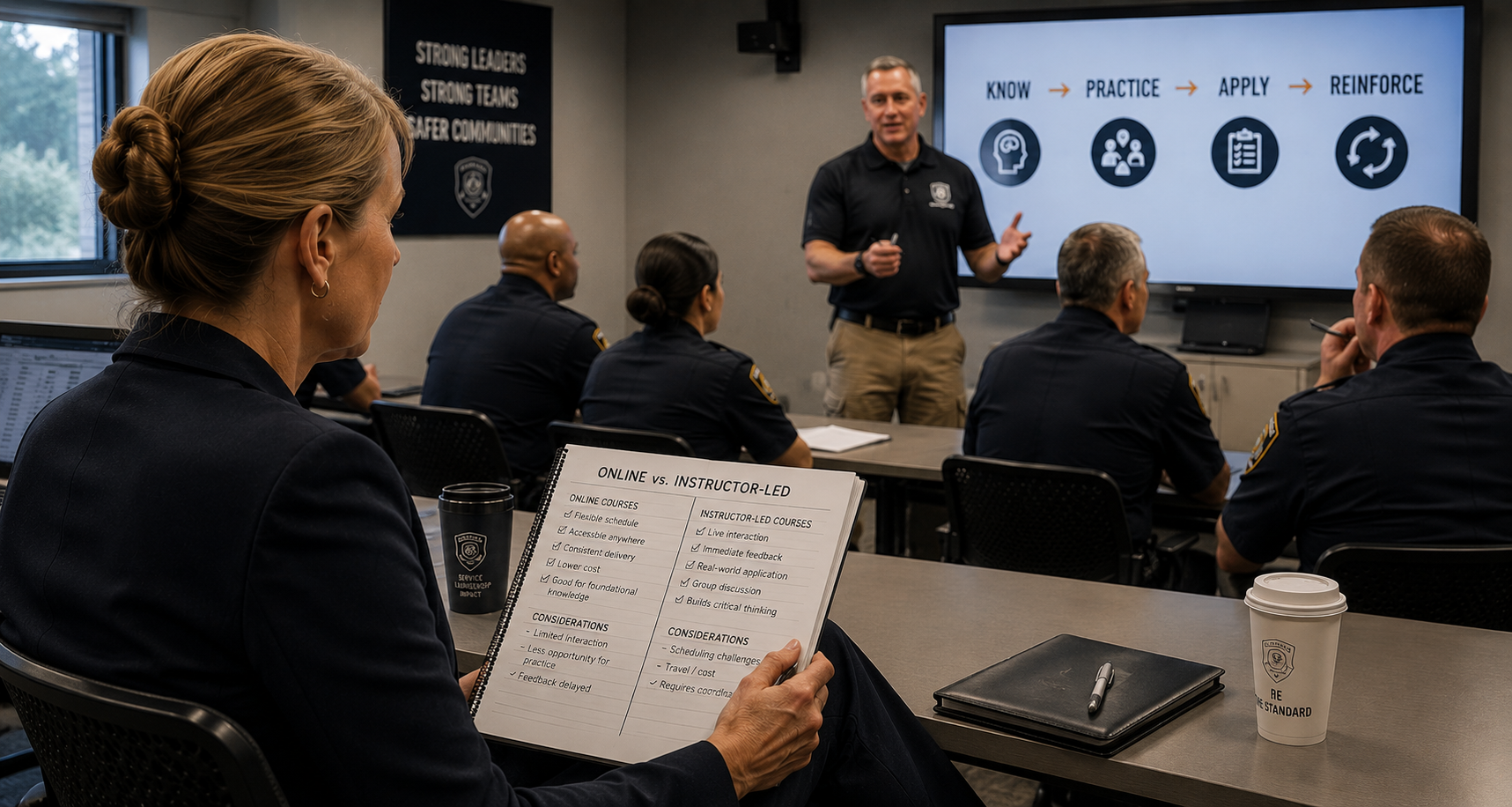
Leadership training should give participants opportunities to apply concepts to situations they are likely to encounter. Discussion, realistic scenarios, case examples, guided problem-solving, and reflection help supervisors move from knowing a concept to using it.
Training should also recognize that leadership needs change over a career. An officer learning to lead without rank faces different challenges than a new sergeant. An experienced supervisor preparing for command has different responsibilities again.
Command Presence's Leadership Series is structured to develop leadership across those different stages.
When Should Police Leadership Training Begin?
Leadership development should begin before promotion.
Officers influence one another long before they receive formal authority. They model behavior, help newer officers, solve problems, communicate expectations, and affect the culture around them.
Developing those abilities early gives future supervisors a stronger foundation when promotion comes.
Newly promoted supervisors then need development specific to their new responsibilities: accountability, conflict, coaching, decision-making, communication, and the changing relationships that come with rank.
But leadership development should not end after a class or promotion.
Leadership grows through training, experience, reflection, feedback, mentorship, and continued practice.
Leadership Development Continues After Training
The real test of leadership training is not what happens in the classroom. It is what happens afterward.
Agencies strengthen training when command staff reinforce expectations, experienced leaders mentor newer supervisors, teams discuss difficult decisions, and supervisors receive meaningful feedback about how they lead—not only how they manage administrative responsibilities.
Developing future leaders also requires agencies to think beyond individual promotions. Leadership development works best when officers can grow progressively, supervisors actively develop others, and the organization is preparing people for greater responsibility before vacancies occur.
That broader approach is explored further in Building a Leadership Pipeline That Lasts.
Training should be the beginning of development, not the end of it.
Better Supervisors Help Build Stronger Agencies
First-line supervisors have an extraordinary opportunity to influence an organization.
They shape how expectations are communicated, how problems are addressed, how officers receive feedback, and how leaders respond when circumstances become difficult.
Over time, those everyday actions affect trust, accountability, morale, performance, and culture.
That is why effective police leadership training should do more than prepare someone to manage a shift. It should prepare them to lead people.
Command Presence develops law enforcement professionals at multiple stages of leadership, from officers learning to lead before promotion to supervisors responsible for developing others. Explore the Leadership Series to see how practical leadership development can support your officers, supervisors, and agency.
FAQ's About Police Leadership Training
What is police leadership training?
Police leadership training develops the skills law enforcement professionals need to lead people effectively. It typically focuses on communication, accountability, decision-making, emotional intelligence, conflict management, coaching, and officer development.
What skills does a police supervisor need?
Police supervisors need clear communication, accountability, sound decision-making, emotional intelligence, coaching, conflict management, and trust-building skills. They also need strong management skills to oversee personnel, resources, performance, and daily operations.
What makes a good police supervisor?
A good police supervisor sets clear expectations, communicates consistently, makes sound decisions, addresses problems fairly, and develops officers. Rank provides authority, but effective supervisors earn credibility through competence, consistency, accountability, and follow-through.
When should law enforcement leadership training begin?
Leadership training should begin before promotion and continue throughout a law enforcement career. Developing communication, judgment, accountability, and peer leadership skills early can better prepare officers for the transition into formal supervision.
What should police leadership training include?
Effective police leadership training should cover communication, accountability, decision-making, emotional intelligence, conflict management, coaching, and officer development. It should also include practical application through realistic scenarios, discussion, case examples, and problem-solving.
What is the difference between police leadership and police management?
Police management focuses on staffing, policies, resources, assignments, and daily operations. Police leadership focuses on developing people, building trust, reinforcing standards, coaching performance, and strengthening culture. Effective supervisors need both.