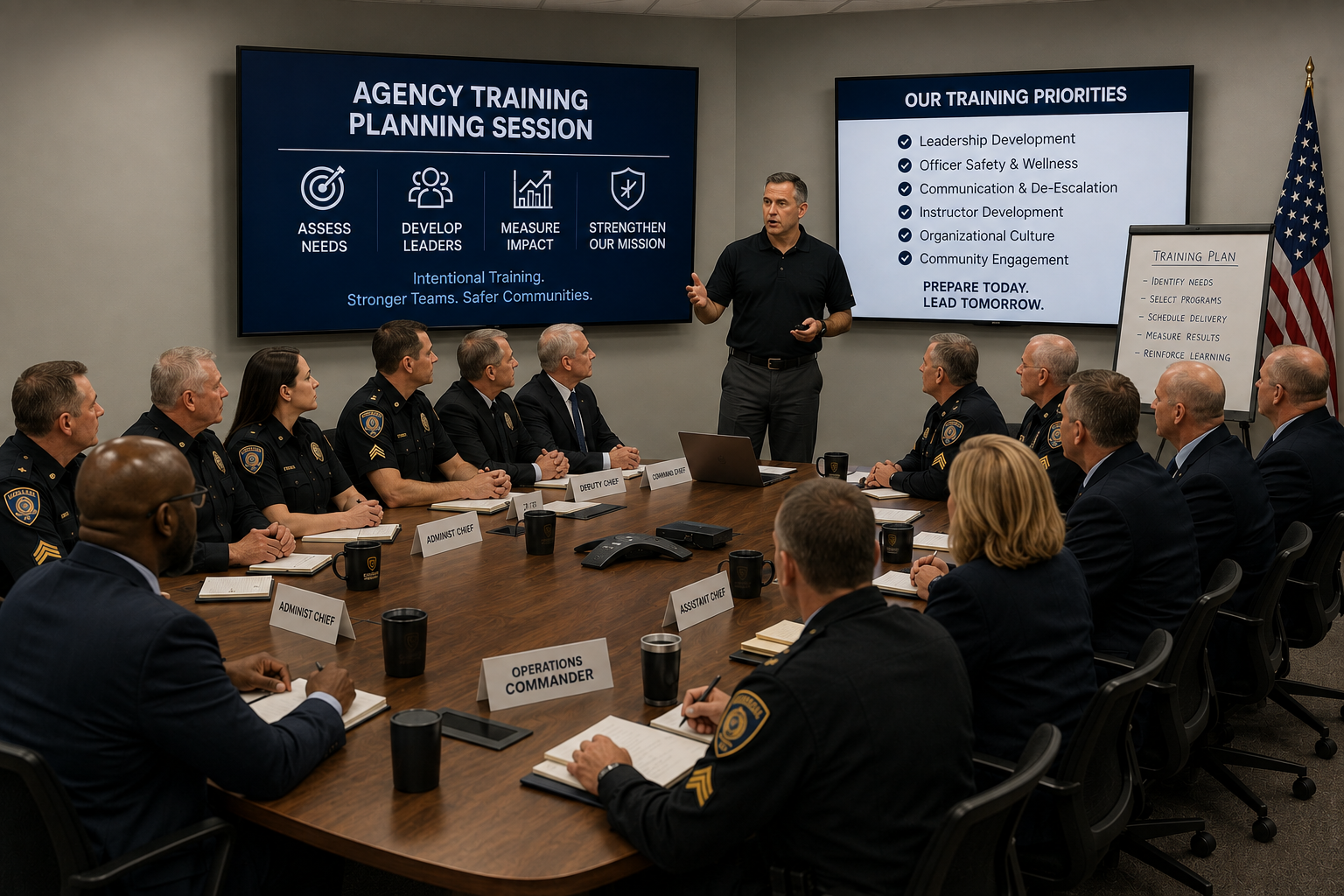
Law enforcement agencies have no shortage of training options. The harder question is determining which training will actually help personnel perform more effectively.
Training coordinators and command staff have to balance operational needs, schedules, budgets, requirements, personnel development, and agency priorities. A course may look good on paper and still fail to produce meaningful results. At the same time, an effective program does not have to be complicated.
The starting point is the outcome.
An effective law enforcement training program connects agency priorities, personnel needs, practical application, and continued development—not simply course completion.
This guide explains the major types of law enforcement training, what makes training effective, how delivery formats differ, how development should change throughout a career, and what agencies should consider when selecting a training provider.
What Is a Law Enforcement Training Program?
A law enforcement training program is a structured approach to developing the knowledge, skills, judgment, and professional capabilities personnel need to perform their responsibilities. Programs may include individual courses, recurring instruction, leadership development, instructor development, wellness education, and other role-specific training.
A single course can address an immediate need. A training program takes a broader view.
Agencies have mandatory requirements to meet, but professional development should also prepare personnel for responsibilities that change throughout their careers. The training needs of a new officer are different from those of a first-line supervisor, instructor, corrections professional, or command-level leader.
The strongest programs account for those differences rather than treating training as a collection of unrelated classes.
What Types of Training Do Law Enforcement Agencies Need?
There is no single training plan that fits every agency. Size, mission, staffing, assignments, personnel experience, and organizational priorities all influence what should be included.
Most agencies, however, need to think across several areas of development.
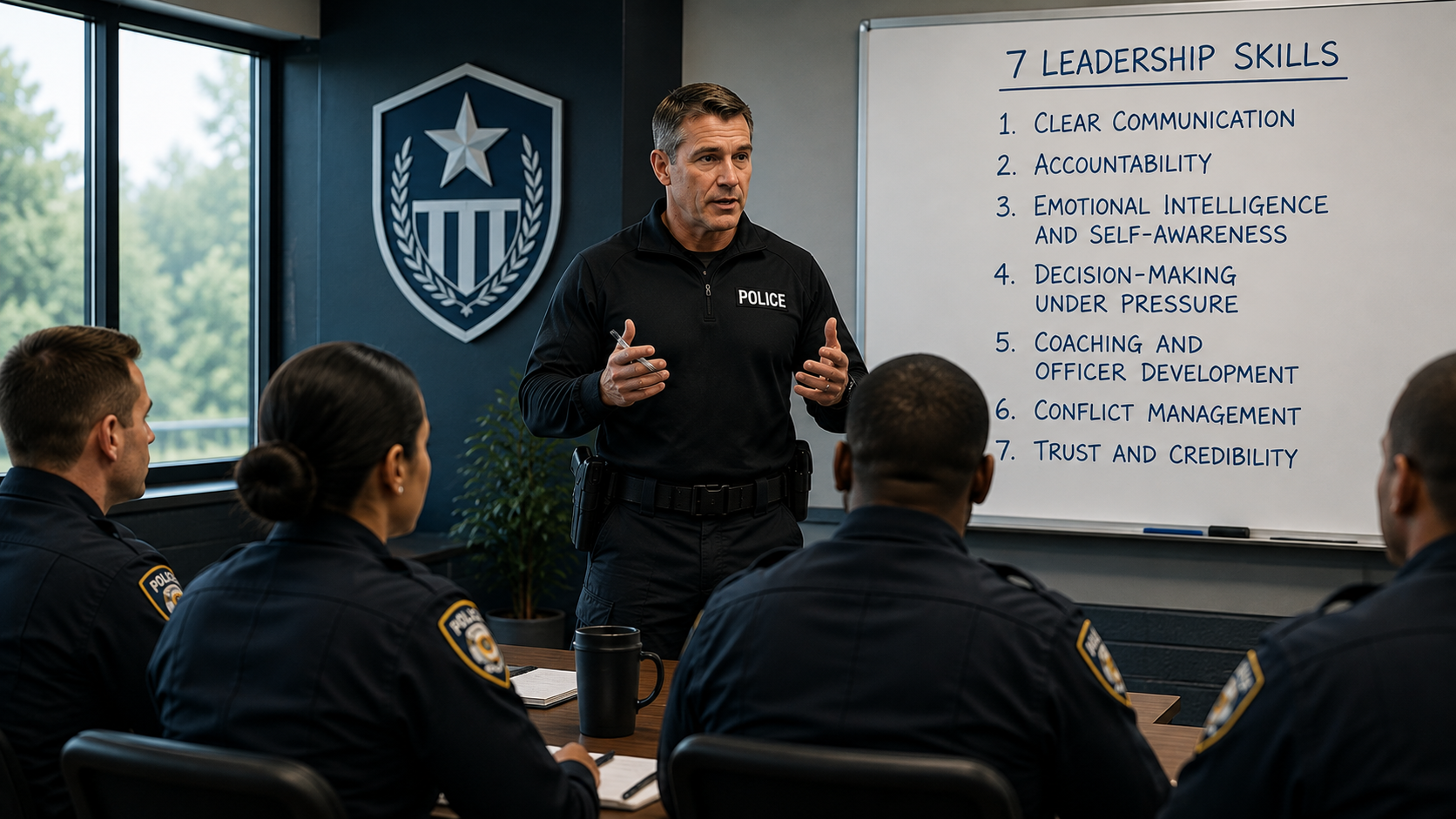
Leadership and Supervisor Training
Leadership development should not begin only after someone is promoted.
Officers can develop communication, judgment, accountability, initiative, and positive influence before they hold formal rank. As responsibilities increase, training should evolve with them.
First-line supervisors face a different set of challenges: leading former peers, setting expectations, addressing performance, coaching employees, managing conflict, and translating organizational priorities into daily practice.
Command staff must think more broadly about culture, consistency, succession, organizational performance, and developing the leaders who will follow them.
That makes leadership development a progression rather than a single supervisory course.
Agencies looking to develop leaders at multiple career stages can explore Command Presence law enforcement leadership training.
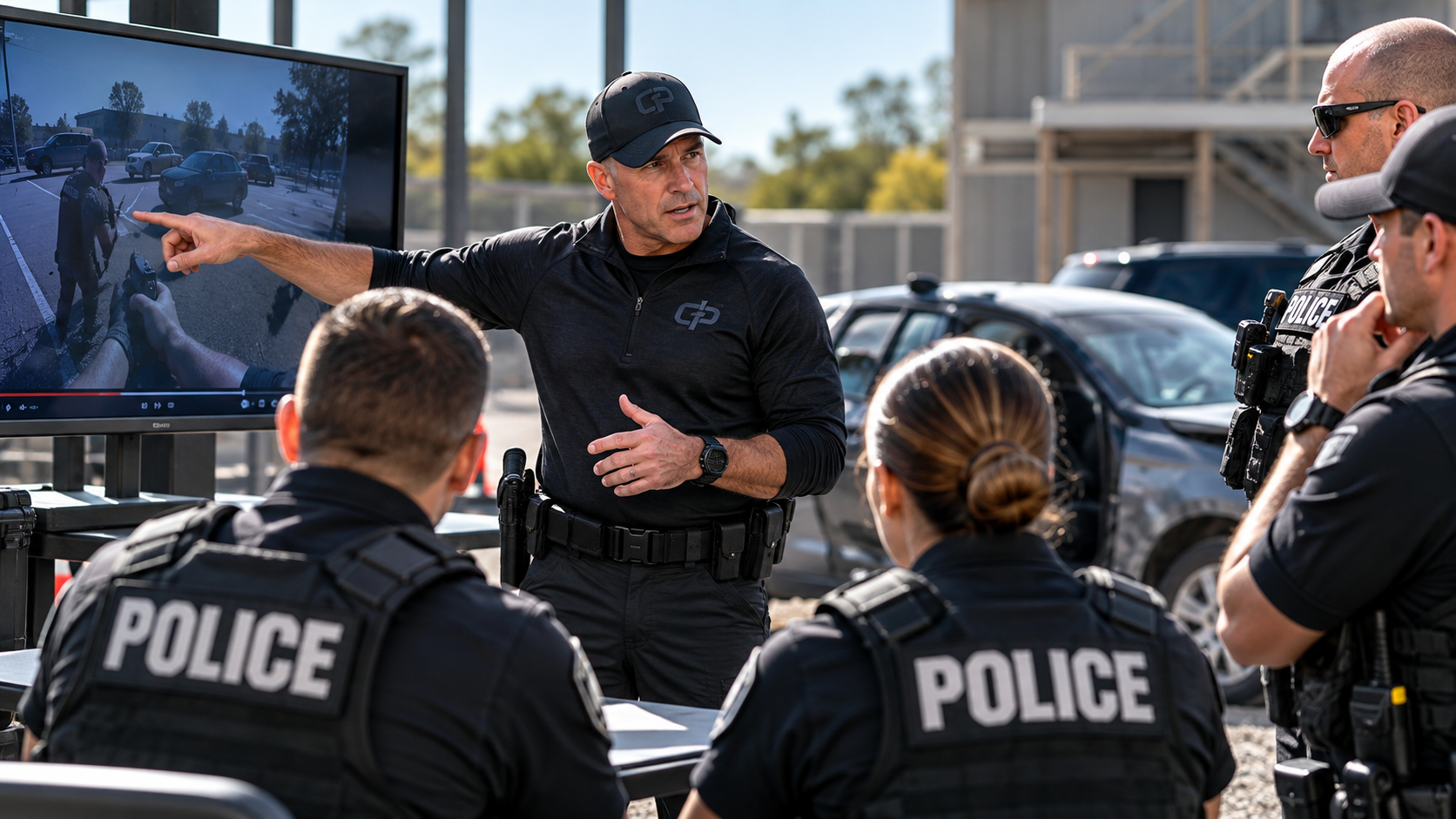
Officer Safety and Community Engagement Training
Officer safety and community engagement are closely connected to communication, decision-making, situational awareness, and professional interactions.
Personnel may understand a policy or concept in a classroom but still need opportunities to think through how it applies in changing circumstances.
Training in this area should help participants connect sound principles with practical decision-making while reinforcing professional service and effective engagement.
Command Presence offers an Officer Safety and Community Engagement Series for agencies focused on strengthening these capabilities.
De-Escalation and Communication Training
De-escalation is often discussed as a set of techniques. In practice, effective communication requires judgment.
Personnel must assess what is happening, recognize when communication can influence the situation, select an appropriate response, and adjust as circumstances change.
That is why effective de-escalation training should go beyond memorizing phrases or completing a module. Personnel need to understand the principles and consider how those principles apply during real interactions.
For a closer look at the role of application and decision-making, see De-Escalation Training: Why Techniques Alone Aren’t Enough.
Instructor Development
An agency's instructors influence far more than the courses they personally teach.
They help shape how information is communicated, how personnel engage with training, and whether instruction connects with real-world responsibilities.
Instructor development can strengthen presentation skills, facilitation, adult learning, course design, participant engagement, and the ability to turn professional experience into effective instruction.
For agencies developing internal trainers, Command Presence offers an Instructor Development Series focused on improving the people responsible for teaching others.
Organizational Culture and Professional Development
Training also communicates what an organization values.
When development consistently reinforces accountability, communication, leadership, professionalism, and service, it can support the culture an agency is trying to build.
When training is disconnected from expectations inside the organization, the opposite can happen. Personnel hear one message in the classroom and experience another when they return to work.
For that reason, training strategy and organizational culture should not be treated as separate conversations.
Agencies focused on the connection between leadership, expectations, and agency culture can explore the Organizational Culture Series.
Officer Wellness Training
Wellness affects an individual's ability to sustain performance throughout a demanding career.
Training can help personnel better understand stress, resilience, healthy habits, and the role leaders play in supporting their people. But wellness should not exist as an isolated initiative. Supervisory practices, communication, workload, organizational culture, and peer support can all influence whether wellness principles are reinforced after training.
Command Presence's Officer Wellness Series addresses professional development through that broader performance lens.
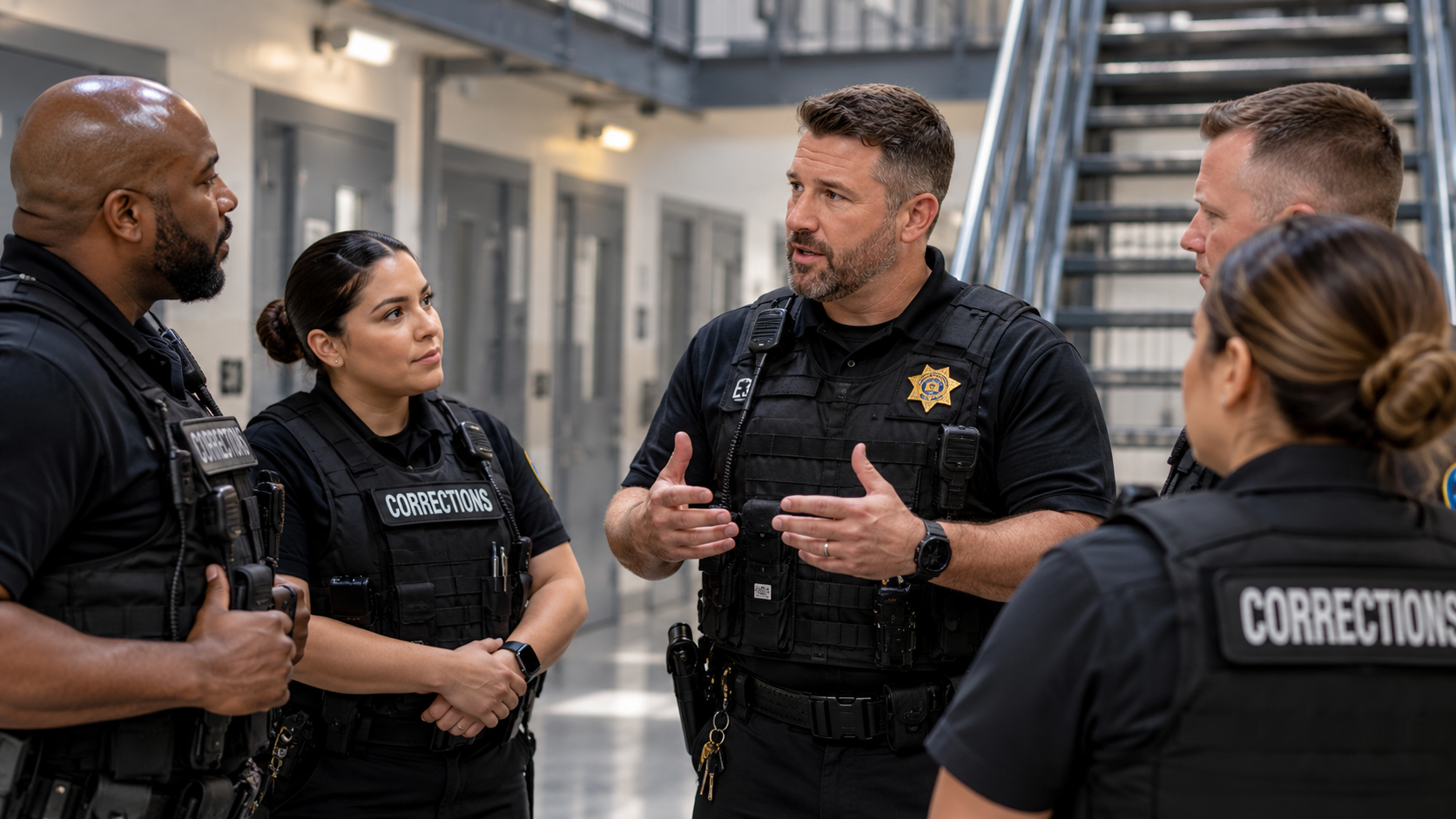
Corrections Training
Corrections professionals operate in environments with their own leadership, communication, safety, and wellness demands.
Training should reflect those realities rather than simply adapting patrol-focused material to a correctional setting.
Relevant development can support communication, supervision, decision-making, leadership, morale, and professional performance within the specific environment corrections personnel experience every day.
Agencies and organizations looking for development specific to that environment can review Command Presence Corrections training.
What Makes a Law Enforcement Training Program Effective?
Effective training begins with a simple question:
What should participants be able to do differently after the training?
If an agency cannot answer that question, it becomes difficult to choose the right content, delivery method, instructor, or measure of success.
Start With the Desired Outcome
Different objectives require different approaches.
If the goal is to communicate an update, the desired outcome may be understanding.
If the goal is to develop a supervisor, improve communication, strengthen decision-making, or prepare personnel for complex interactions, understanding is only part of the objective.
Start with the performance need rather than the course title.
Instead of asking, “What training should we schedule?” ask:
“What does our agency need personnel to understand or do more effectively?”
That question makes the selection process much clearer.
Connect Training to Real-World Responsibilities
Adults are more likely to see value in training when they understand how it connects to their responsibilities.
A new supervisor does not need leadership concepts in isolation. That supervisor needs to understand how those concepts apply when addressing poor performance, communicating expectations, resolving conflict, or making a difficult decision.
The closer training connects the lesson to the participant's actual role, the easier it becomes to see how learning can transfer back to work.
Create Opportunities for Application and Feedback
Some learning objectives can be accomplished by presenting information clearly. Others benefit from discussion, practice, reflection, and feedback.
Leadership and interpersonal development are good examples.
Someone can understand the principles behind an accountability conversation and still struggle to conduct that conversation effectively. Application gives participants an opportunity to work through the difference between knowing what to do and being able to do it.
Reinforce Learning After Training Ends
A course has an end date. Development does not.
Supervisors, mentors, peers, expectations, and organizational culture all influence what happens after personnel return to work.
Agencies should consider reinforcement before the course begins:
- What should supervisors follow up on?
- Where can participants apply what they learned?
- What behaviors should leaders reinforce?
- What additional development may be needed?
Training has greater value when the organization gives people opportunities to use it.
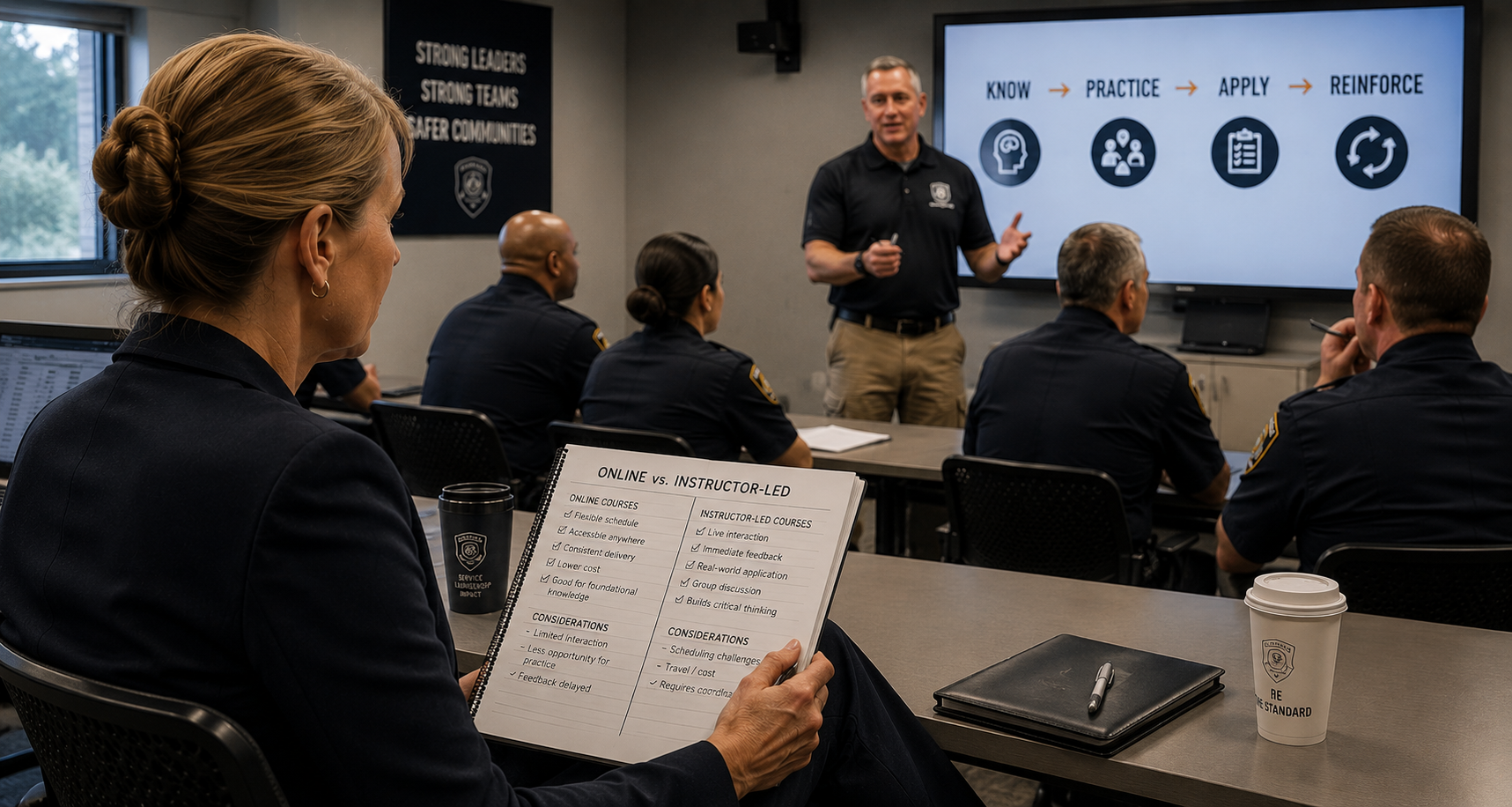
Online vs. Instructor-Led vs. Blended Law Enforcement Training
Delivery format should follow the learning objective.
Online training can provide flexibility, consistent delivery, and efficient access to foundational information. Instructor-led training can create opportunities for interaction, discussion, practice, and immediate feedback. Blended approaches can use both formats at different stages of the learning process.
No format is automatically the right choice for every objective.
The question is not simply whether online or instructor-led training is better. Agencies should determine which format best supports the outcome they need.
For a deeper comparison, see our guide to Online vs. Instructor-Led Law Enforcement Training.
How Should Training Change Across a Law Enforcement Career?
Training needs change as responsibilities change.
A strong agency training strategy recognizes career stages and prepares personnel before new responsibilities expose gaps in their development.
Frontline Officers and Emerging Leaders
Leadership begins before rank.
Frontline personnel can develop communication, sound decision-making, initiative, credibility, emotional control, and the ability to positively influence others long before entering a formal supervisory role.
Developing those capabilities early gives future supervisors a stronger foundation when promotion occurs.
For agencies that want to begin leadership development before promotion, the Leadership Series includes training designed for emerging as well as experienced leaders.
First-Line Supervisors
Promotion changes the job.
A first-line supervisor is no longer responsible only for personal performance. That person must now influence the performance of others.
Training at this stage should help supervisors establish expectations, communicate clearly, coach employees, address performance problems, manage conflict, make sound decisions, and build credibility through consistent leadership.
The transition can become especially difficult when a new supervisor is suddenly responsible for people who were recently peers.
Those challenges deserve deliberate preparation rather than an assumption that a strong officer will automatically become a strong supervisor.
For a deeper look at the capabilities supervisors need to develop, see Police Leadership Training: Skills Every Supervisor Needs.
Command Staff and Senior Leaders
Senior leadership requires a broader perspective.
Command-level decisions can influence culture, succession, communication, leadership consistency, employee development, and long-term organizational performance.
Training for senior leaders should therefore extend beyond individual leadership techniques. It should help leaders think about how systems, expectations, and development efforts shape the organization as a whole.
That includes preparing future leaders before vacancies occur. Our guide to building a law enforcement leadership pipeline explores how agencies can make leadership development an ongoing process instead of waiting until someone is promoted.
How Should Agencies Evaluate Law Enforcement Training Providers?
The quality of a training program depends on more than its title, duration, or delivery format.
Agencies should evaluate whether the provider understands the audience, can define meaningful learning outcomes, and can connect instruction to the responsibilities participants actually hold.
Instructor Experience and Credibility
Relevant professional experience matters because instructors need to understand the environment in which participants work.
But experience alone does not guarantee effective instruction.
Strong instructors must also be able to communicate clearly, facilitate learning, connect concepts to practical responsibilities, and create an environment where participants can engage with the material.
Clearly Defined Learning Outcomes
A provider should be able to explain what participants are expected to gain from a course.
“Improve leadership” is broad.
“Help supervisors communicate expectations, address performance issues, and lead with greater consistency” provides a clearer picture of the intended outcome.
Clear outcomes also make it easier for an agency to determine whether a course fits its needs.
Practical Application
Agencies should look at how a course moves participants from information to application.
Depending on the subject, that might involve discussion, case examples, scenarios, problem-solving, guided reflection, exercises, or opportunities to practice.
The method can vary. What matters is whether it supports the objective.
Relevance to the Participant's Role
A course can contain valuable information and still be poorly matched to its audience.
An emerging leader, new supervisor, experienced instructor, corrections professional, and senior executive do not face the same responsibilities.
Effective training recognizes who is in the room.
Fit With Agency Needs
Agencies also have practical considerations.
Scheduling, staffing, class size, location, delivery format, budget, and the ability to train multiple groups can all influence the decision.
Those considerations are legitimate, but they should be evaluated alongside the learning objective rather than replacing it.
For a more detailed provider review, use our practical checklist for evaluating a law enforcement training vendor.
How Can Agencies Measure Training Effectiveness?
Attendance is easy to measure. Impact is harder.
That does not mean agencies need an elaborate measurement system for every class. It means the measure should match the reason the training was selected.
A useful way to think about effectiveness is through several levels.
Completion
Did the intended personnel attend or complete the training?
This establishes participation, but it tells the agency very little about learning or application.
Learning
Did participants understand the material?
Knowledge checks, participant feedback, discussion, demonstrations, or other assessment methods may help answer this depending on the course.
Application
Can participants use what they learned?
This is especially important when the objective involves communication, supervision, instruction, judgment, or another applied capability.
Behavioral Change
Are participants doing anything differently after the course?
Supervisor observations, coaching conversations, follow-up discussions, and participant self-assessment can provide useful insight.
Organizational Outcomes
Some training initiatives are connected to broader priorities such as leadership development, communication, morale, retention, consistency, or organizational culture.
Those outcomes are influenced by more than training alone, so agencies should be cautious about attributing every change to a single course. Still, looking at relevant trends can help determine whether training is contributing to the desired direction.
Completion tells an agency that training occurred. It does not necessarily tell the agency whether training worked.
How Do You Build a Long-Term Law Enforcement Training Strategy?
A long-term training strategy begins by connecting development to the direction of the agency.
Instead of starting with a list of available courses, start with organizational needs.
Identify Agency Priorities
What does the agency need to strengthen?
Priorities might include supervisor development, communication, leadership consistency, instructor capability, officer wellness, community engagement, succession, or another operational need.
Those priorities give training a purpose.
Assess Development Gaps
Next, determine where the gap exists between current performance and desired performance.
A recurring issue may not always be a training problem. Sometimes expectations are unclear. Sometimes supervision is inconsistent. Sometimes a process needs to change.
Training should be used when development can meaningfully address the gap.
Match Training to Roles and Career Stages
Not everyone needs the same course at the same time.
A more intentional approach considers what people need based on their responsibilities and where they are in their careers.
That can help agencies create development pathways instead of isolated training events.
Develop People Before Promotion
One of the most useful times to develop leadership capability is before someone receives formal authority.
Emerging leaders can begin learning how to communicate, make decisions, take initiative, support teammates, and influence culture while they are still frontline personnel.
Then promotion becomes the next stage of development rather than the beginning of it.
Reinforce Development Through Leadership
What supervisors do after training matters.
If the organization wants personnel to apply new skills, leaders should understand what was taught and reinforce the relevant expectations.
That might happen through coaching, debriefs, mentoring, performance conversations, or simply giving people opportunities to apply what they learned.
Review and Adjust
Training plans should change as agency needs change.
Review what was delivered, who participated, what was learned, what personnel are applying, and where gaps remain.
The purpose is not to create more training. It is to make better decisions about development.
Questions Agencies Should Ask Before Selecting Training
Before committing time and resources to a course or program, agencies should be able to answer a few practical questions:
- What problem or development need are we trying to address?
- Who needs the training?
- What should participants understand or be able to do afterward?
- Does the objective require information, practice, feedback, or a combination of all three?
- Which delivery format best supports that objective?
- How does the training relate to participants' actual responsibilities?
- How will supervisors or agency leaders reinforce the learning afterward?
- How will we determine whether the training had the intended effect?
- Does the provider understand the people and environment being served?
These questions shift the conversation from “Which course should we buy?” to “What development does our agency actually need?”
That is a stronger starting point.
Finding the Right Law Enforcement Training Program for Your Agency
There is no universal “best” law enforcement training program.
The right choice depends on what the agency needs to accomplish, who needs development, and what type of learning experience will best support that outcome.
A useful sequence is:
Agency Need → Learning Objective → Audience → Delivery → Application → Reinforcement
That sequence keeps the decision centered on performance rather than convenience alone.
It also helps training coordinators and command staff explain why a particular program was selected. Instead of defending training based on a course description, they can connect the investment to an identified agency need and a defined development outcome.
Command Presence provides training across leadership, organizational culture, instructor development, officer safety and community engagement, corrections, and officer wellness. Agencies can explore law enforcement training course options based on their personnel and development priorities.
Frequently Asked Questions About Law Enforcement Training Programs
What are law enforcement training programs?
Law enforcement training programs are structured learning and professional development efforts designed to strengthen the knowledge, skills, judgment, leadership, and capabilities personnel need for their roles. They can include individual courses, recurring instruction, leadership development, instructor development, wellness training, and other specialized education.
What types of training do law enforcement officers need?
Training needs vary by role, career stage, assignment, agency priorities, and jurisdiction. Common areas include leadership and supervision, communication, de-escalation, officer safety, community engagement, instructor development, wellness, and other role-specific professional development.
How often should law enforcement officers receive training?
There is no single schedule that applies to every agency or training topic. Requirements vary by jurisdiction and certifying authority, while professional development needs depend on role, responsibility, agency priorities, and performance needs.
Agencies should meet applicable requirements while also providing development when personnel need new or stronger capabilities.
Is online law enforcement training effective?
Online training can be effective for foundational knowledge, standardized information, updates, and refreshers.
When an objective requires significant interaction, practice, judgment, or feedback, instructor-led or blended training may provide additional opportunities for application. For a fuller comparison, see Online vs. Instructor-Led Law Enforcement Training.
What should agencies look for in a law enforcement training provider?
Agencies should consider instructor credibility, clearly defined learning outcomes, practical application, relevance to the participant's role, delivery options, and fit with agency needs.
The provider should be able to explain what participants are expected to gain and how the course supports that objective.
How can agencies measure whether training is effective?
Agencies can look beyond attendance by evaluating learning, practical application, behavioral change, supervisor observations, participant feedback, and relevant performance or organizational outcomes.
The appropriate measure should reflect the original reason for selecting the training.
What is the difference between law enforcement training and professional development?
Training often addresses a defined knowledge or skill need.
Professional development is broader and focuses on continued growth throughout a person's career. Leadership development, mentorship, instructor development, and preparation for future responsibilities can all be part of a long-term professional development strategy.
Build Training Around the Outcome
A strong law enforcement training program is not defined by how many courses an agency offers or how many certificates personnel collect.
It is defined by purpose.
The agency identifies what needs to improve. Training is matched to the right people and the right objective. Participants have an opportunity to understand and apply what they learn. Leaders reinforce that development when they return to work.
That turns training from an event on the calendar into part of how an agency develops its people.
The goal is not simply more training. It is better-prepared people who can lead, communicate, make sound decisions, and serve effectively.
When training decisions begin with that outcome, agencies are in a stronger position to invest their time and resources where development can matter most.
Explore Command Presence Course Offerings to find training aligned with your agency's development priorities.